

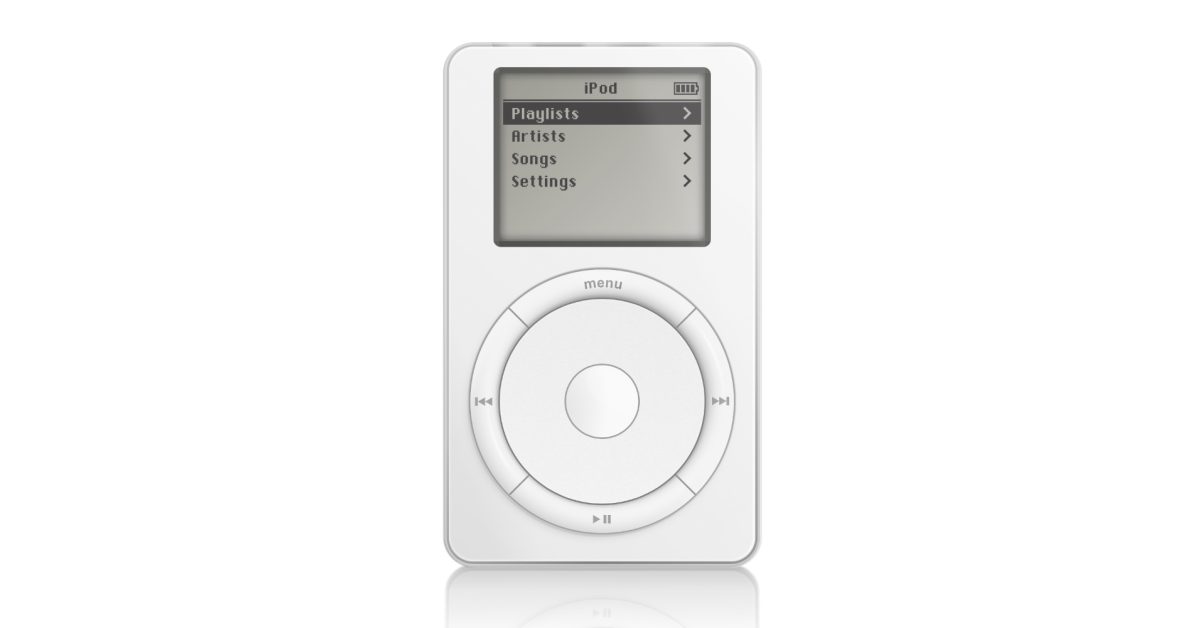
Apple has quietly added a delightful surprise for music fans. On the 25th anniversary of the iPod’s unveiling, the company’s website now hides a fully interactive original iPod inside a Page Not Found screen. The easter egg was spotted by attentive users and quickly spread across social media, giving longtime Apple followers a reason to smile.
The digital iPod appears when someone visits a non-existent path on the Apple Music website. Instead of a plain error message, the page displays a detailed replica of the original iPod, complete with its iconic white face, black click wheel, and small screen. The device is not just a static image. It is a working simulation that invites visitors to click, drag, and explore.
How the interactive iPod works
The on-screen iPod responds to mouse and touch input. Visitors can press the menu button to navigate through the interface, use the forward and back buttons to move between screens, and click the play/pause button to control playback. The scroll wheel is fully functional: clicking and dragging around it moves the selection on the screen, just like running a finger around the original physical wheel.
Pre-installed on the device is a selection of songs from artists who were popular around the time the first iPod launched. Users can select any of these tracks and listen to 90-second previews directly in the web interface. The experience is designed to feel like a miniature trip back to 2001, when the phrase “1,000 songs in your pocket” first entered the cultural vocabulary.
The easter egg does not require a subscription or a login. It is available to anyone who stumbles onto the right non-existent URL. Apple has not publicly announced the feature, which makes its discovery feel like a secret shared among fans. The company has a long history of hiding playful details in its software and websites, and this iPod tribute fits neatly into that tradition.
The original iPod: a device that changed everything
Apple introduced the first iPod on October 23, 2001. The announcement came at a small event at Apple’s Town Hall in Cupertino, where then-CEO Steve Jobs walked onto the stage and delivered a simple but powerful promise: 1,000 songs in your pocket. At the time, portable music players were dominated by CD players and early MP3 players that were either bulky or limited in storage. Apple’s answer was a sleek device with a 5GB hard drive, a 10-hour battery, a FireWire port, and a mechanical scroll wheel.
The first iPod cost $399, a premium price that attracted criticism from some observers. But the combination of design, storage, and ease of use
Source:9to5Mac News