

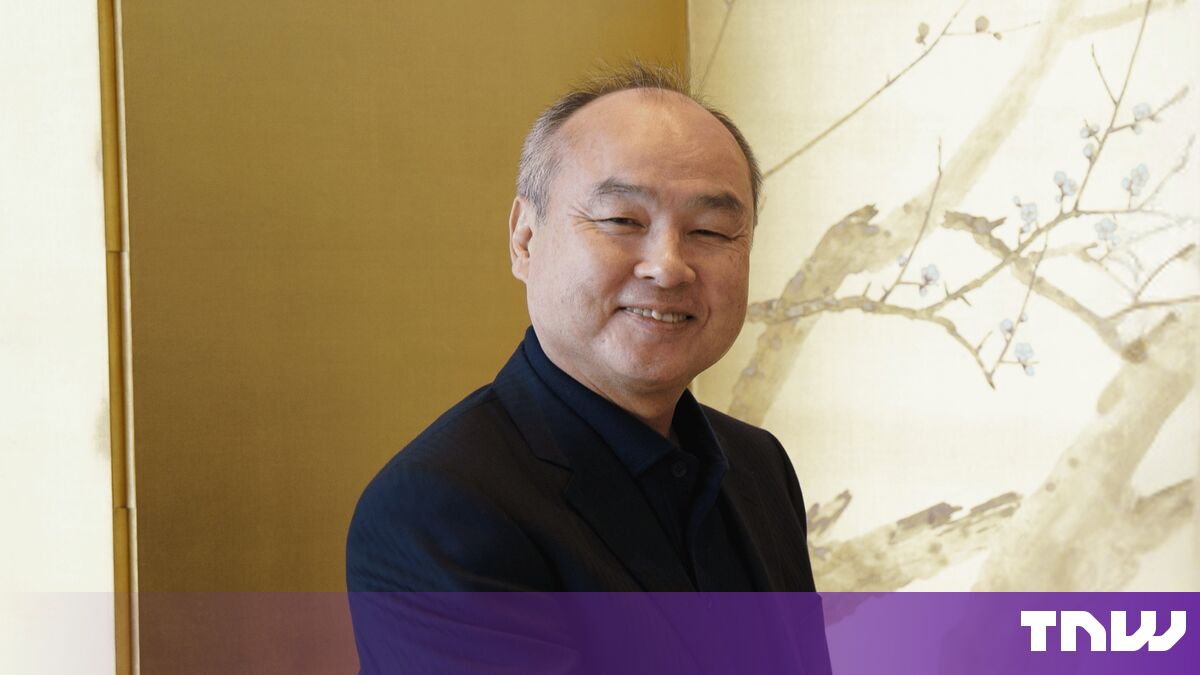
Malaysia’s prime minister, Anwar Ibrahim, said SoftBank founder Masayoshi Son has chosen Malaysia for a $50 billion investment in artificial intelligence, new technology and data centres, placing the country at the centre of one of the region’s largest planned technology commitments.
Anwar announced the plan on Saturday during the launch of a national cost-of-living programme in Malacca. He said Son told him about the decision in a video call on Tuesday. Remarks published by the prime minister’s office in Malay described Son as choosing Sarawak, Kuching and the peninsula for the expansion. The scale, if confirmed, would make it among the largest investments in the region.
SoftBank has not announced the $50 billion figure. Its public releases since 8 October do not mention it. That gap between a political announcement and corporate confirmation is central to how the plan should be read: it signals intent and high-level political engagement, but not yet a signed, financed and fully disclosed programme.
Key facts at a glance
- Malaysia’s prime minister says SoftBank founder Masayoshi Son has selected Malaysia for a $50 billion investment in AI, new technology and data centres.
- Anwar said Son told him about the plan in a video call on Tuesday and announced it on Saturday in Malacca.
- The locations named were Sarawak, Kuching and the peninsula.
- SoftBank has not confirmed the $50 billion figure in its public announcements.
- On 8 October, SoftBank signed a framework agreement in Kuching with Grab and Petroleum Sarawak Berhad, or PETROS, to explore an AI and digital infrastructure platform in Sarawak.
- The framework agreement names no amount and does not commit the companies to final deals or project execution.
- SoftBank is expected to fund only part of the $50 billion, with financing and other partners covering the rest, according to reporting on the plan.
- Anwar linked the investment to jobs and political stability, speaking ahead of a state election in Malacca on 14 November.
- Malaysia recorded RM385.7 billion of data-centre-related investment from 2021 to mid-2026, according to the Malaysian Investment Development Authority.
- In September, OpenAI became the anchor customer for a Firmus site in Malaysia.
- Son has been funding AI bets with a new $60 billion bond and loans secured on SoftBank’s OpenAI stake.
A framework in Sarawak, not a final commitment
The most concrete corporate step disclosed so far is the framework agreement signed in Kuching on 8 October. SoftBank, Grab and PETROS agreed to explore an AI and digital infrastructure platform in Sarawak. They will draw up a roadmap to build it in phases, covering AI compute, robotics and local workforce development.
The agreement names no amount. It does not commit the companies to sign final deals or carry out the project. That makes it a starting point for feasibility work and negotiation rather than a completed investment. Framework agreements can be important signals, especially when they bring together a global technology investor, a regional ride-hailing and super-app group, and a state-owned energy company. But they are not the same as binding contracts, committed capital or construction schedules.
The distinction matters because the $50 billion figure is far larger than a single framework deal. A programme of that size would require financing, partners, sites, power, regulatory approvals and a delivery plan. SoftBank is expected to fund only part of the total, with financing and other partners covering the rest, according to reporting on the plan. That structure would be consistent with large infrastructure projects, where anchor investors, state entities, banks and infrastructure funds share risk and capital requirements.
Why Sarawak and the peninsula
Sarawak has sought to attract energy-intensive industry by emphasising hydropower and industrial parks. Kuching, the state capital, is the administrative and commercial centre for those efforts. Data centres and AI compute clusters require large amounts of reliable electricity, land and cooling, and Sarawak’s hydropower resources give it an advantage in marketing itself to technology investors.
The peninsula offers a different set of advantages. It includes Kuala Lumpur, Selangor and Johor, where Malaysia has built much of its existing data-centre capacity. Johor in particular has benefited from demand from Singapore, where land and power constraints have limited new projects. Proximity to Singapore, subsea cables, airports and a large pool of technical workers make the peninsula attractive for cloud and AI infrastructure.
The combination of Sarawak and the peninsula suggests a split model. Sarawak could host power-intensive compute and industrial-scale digital infrastructure, while the peninsula could host customer-facing data centres, corporate functions, research and development, and links to regional networks. Anwar’s remarks did not provide a detailed allocation of the $50 billion, and SoftBank has not published one.
What the money would target
Anwar said the investment would cover AI, new technology and data centres. The framework agreement adds more detail: AI compute, robotics and local workforce development. AI compute is the hardware and facilities needed to train and run large models. That includes data centres with specialised chips, high-bandwidth networking and substantial power supplies. Robotics covers automation and advanced manufacturing, where AI models are increasingly used to control machines and improve productivity.
Workforce development may prove to be one of the most important parts of the plan. Data centres create construction jobs and some permanent technical roles, but the number of direct jobs per dollar invested is often modest. The larger economic impact comes from skills, supply chains and the ability of local firms to use AI. Anwar urged better skills in AI, digitalisation and chips, and said he wants Malaysia to move from back-end work to front-end technology. That means shifting from routine operations and assembly toward design, research, software and higher-value engineering.
If the plan moves forward, it could create demand for technicians, engineers, data scientists and project managers. It could also support local suppliers in construction, electrical equipment, cooling, security and maintenance. The risk is that the skills pipeline does not keep pace, leaving companies to bring in foreign specialists and limiting the spillover to the local economy.
Political stability and the Malacca election
Anwar tied the investment to political stability. Speaking to an audience that included many students, he said the investment would bring new and better jobs. He then linked confidence in government to the willingness of investors to come.
"If there is no investment, if people have no confidence in this government, if the leadership keeps quarrelling, people will not be interested in coming," he said.
In the same speech, Anwar said politics in Malacca was heating up. The state holds elections on 14 November. The timing of the announcement, shortly before a state vote, is likely to shape how it is received. Governments often present investment announcements as evidence of economic management and stability, especially during campaigns. Opposition parties may ask how much of the plan is firm, how it will be financed and what conditions are attached.
The political context does not invalidate the economic signal. It does mean that voters and investors should separate the headline figure from the underlying commitments. A framework agreement and a prime ministerial statement are evidence of interest. They are not the same as a final investment decision.
Malaysia’s data-centre boom
Malaysia has recorded RM385.7 billion of data-centre-related investment from 2021 to mid-2026, according to the Malaysian Investment Development Authority. That sum underscores how quickly the sector has grown and why the government is eager to attract more AI-related projects. Data centres have become a major part of Malaysia’s investment promotion strategy, particularly in Johor and the Klang Valley.
The sector’s growth has been driven by demand from cloud providers, AI companies and regional digital platforms. In September, OpenAI became the anchor customer for a Firmus site in Malaysia, a sign that the country is attracting participants from the global AI supply chain. Such projects can bring capital, technical expertise and international visibility. They can also put pressure on electricity grids, water supplies and local infrastructure, which is why locations with abundant power, such as Sarawak, are promoting themselves aggressively.
The Malaysian government has also emphasised semiconductors, digitalisation and AI skills. The country has a long history in electronics manufacturing and chip assembly and testing. Moving into front-end design, advanced packaging and AI services would require deeper skills and more research capacity. The SoftBank plan, if realised, would be judged partly on whether it helps make that transition.
SoftBank’s AI financing machine
SoftBank has become one of the most active corporate investors in AI. Son has been funding AI bets with a new $60 billion bond and loans secured on SoftBank’s OpenAI stake. The scale of that financing shows how much capital the group is mobilising for AI infrastructure and related technologies. It also shows why a $50 billion plan in Malaysia would depend on partners and external financing rather than SoftBank’s balance sheet alone.
SoftBank’s investment history includes large, long-horizon bets in technology, from the Vision Fund to semiconductor design and artificial intelligence. Those bets have produced big wins and big losses, and they have made Son one of the most closely watched investors in the sector. The Malaysia plan fits that pattern: a large, ambitious commitment tied to a technology wave that requires enormous amounts of compute, power and real estate.
For Malaysia, the opportunity is to secure a place in that build-out. For SoftBank, the opportunity is to gain access to sites, energy and government support in a region where demand for AI infrastructure is rising. The framework agreement in Sarawak is the first concrete step. The $50 billion figure attributed to Son is the headline. The details that will determine the outcome are financing, power, skills and whether the framework agreement turns into binding contracts.
Source:TNW | Asia News