

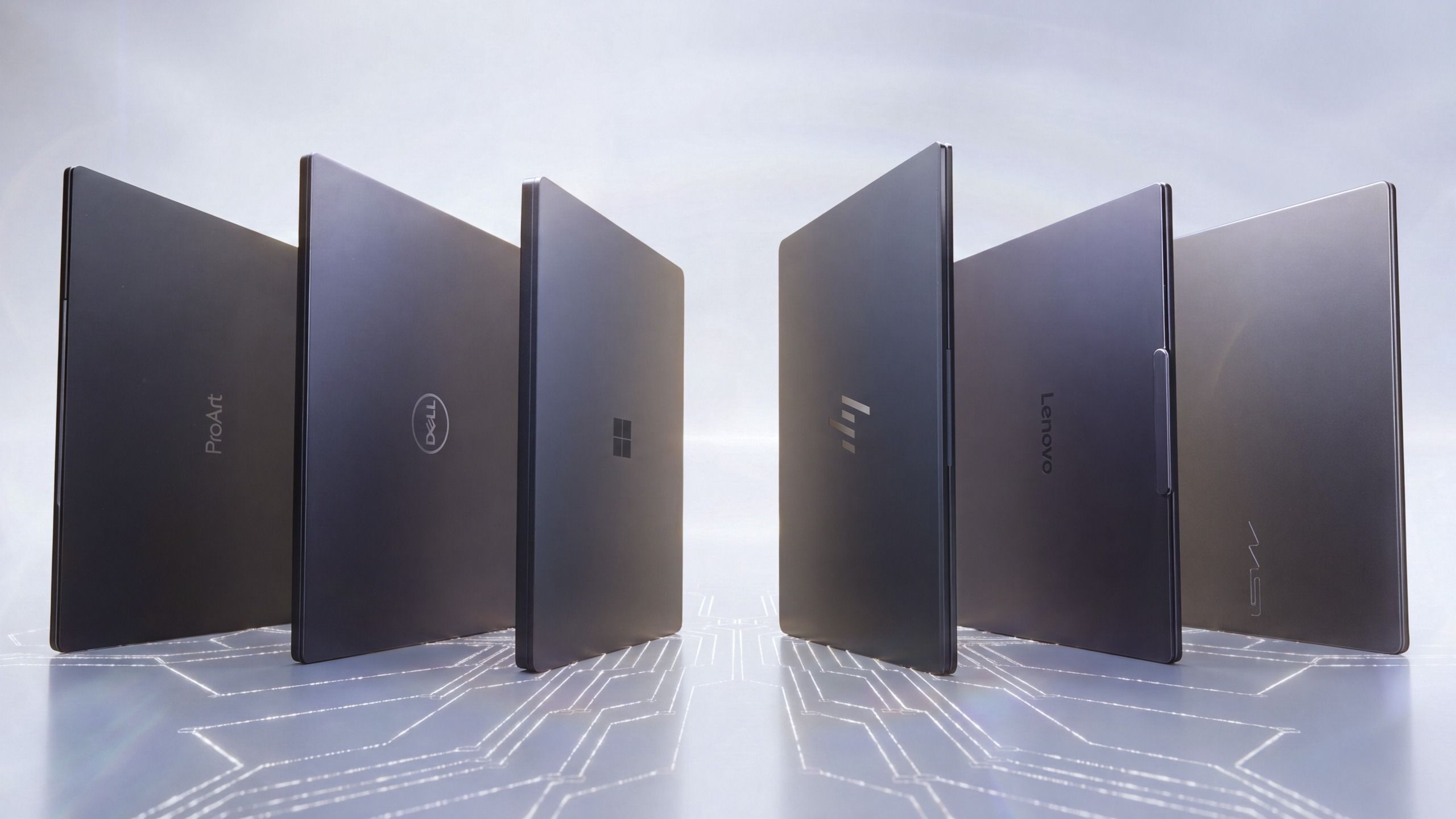
A New Mobile GPU Officially Arrives
The RTX Spark has launched, and Antonline has moved quickly to begin selling laptops equipped with it, giving buyers an early route to hardware marketed squarely at people who want faster AI-assisted workflows and stronger gaming performance from the same machine. Rather than treating the new part as a niche gaming component, the retailer's listings frame it as a dual-purpose platform — one aimed at creators, developers, analysts, and players who have grown tired of maintaining two separate systems for work and play.
The timing is notable. Laptop buyers have spent the past several product cycles watching discrete graphics options split into ever narrower categories: thin-and-light parts tuned for battery life, bulky gaming chips tuned for frame rates, and a newer class of mobile silicon explicitly designed around machine learning workloads. The RTX Spark is being positioned as an attempt to collapse those categories back together, and Antonline is capitalizing on the launch window to capture shoppers who have been waiting on the sidelines for exactly this kind of consolidation.
Why a Retail Partner Matters at Launch
Launch-day availability is rarely uniform across the retail landscape. New mobile graphics platforms typically arrive first in a handful of flagship configurations from the largest notebook manufacturers, then trickle down into mid-range and budget chassis over the following months. By listing RTX Spark machines immediately, Antonline is signaling that it intends to carry the platform across a spread of configurations rather than a single halo product.
That distinction matters for buyers. A launch that appears only in a premium 17-inch desktop replacement does little for someone who needs a portable 14-inch machine for travel. A launch that spans multiple form factors, on the other hand, gives shoppers a genuine choice about how much weight, battery capacity, and thermal headroom they are willing to trade for performance. Early listings suggest the retailer is pursuing the broader approach, with configurations differentiated by display, memory, storage, and cooling design rather than by the GPU alone.
The AI Workflow Pitch
The most heavily emphasized part of the RTX Spark story is not frame rates — it is workflow efficiency. Local AI workloads have migrated from data centers into laptops at a surprising pace over the past two years. Image generation, transcription, real-time translation, document summarization, background segmentation during video calls, and code assistance all now run, at least in part, on the machine sitting in front of the user rather than in a remote cloud.
That shift changes what a laptop GPU is actually for. Cloud-based inference is limited mainly by network latency and subscription costs; local inference is limited by memory bandwidth, available VRAM, and the efficiency of the accelerator itself. Vendors have responded by tuning mobile graphics silicon for sustained matrix operations rather than short bursts of rasterization, and the RTX Spark appears to follow that playbook. For a video editor scrubbing through a timeline with AI-assisted noise reduction applied, or a designer generating draft concepts while offline, the difference between a general-purpose integrated GPU and a dedicated accelerator is often measured in minutes rather than milliseconds.
The practical appeal is straightforward. Work that once required an upload, a queue, and a download can now happen inside the application, on a train, on a plane, or under a corporate policy that forbids sending sensitive material to third-party servers. That last point is frequently undersold in consumer marketing, but it is often the deciding factor for professional buyers in regulated industries.
Gaming Performance Remains Central
None of which means gaming has been deprioritized. The RTX Spark is still a graphics processor first, and the laptops carrying it are being sold with the usual accompanying considerations: refresh rate, panel resolution, response time, and the thermal design needed to sustain clock speeds during extended sessions.
Modern gaming laptops live or die by their cooling systems. A GPU that performs impressively in a five-minute benchmark can throttle substantially over a two-hour session if the chassis cannot dissipate heat effectively. Buyers evaluating RTX Spark configurations should look closely at how many heat pipes and fans each model uses, whether the manufacturer publishes sustained performance figures rather than peak numbers, and how loud the system becomes under load. Two laptops with identical silicon can differ meaningfully in real-world frame rates for exactly these reasons.
Display choice compounds the issue. A 1440p or 1600p panel with a high refresh rate pairs naturally with this class of hardware, while a 4K panel on a smaller chassis often forces a compromise between resolution and frame rate that no amount of GPU horsepower fully resolves. Matching the screen to the GPU is one of the most consequential decisions a laptop buyer makes, and it is easy to overlook when the processor is the headline.
The Wider Competitive Picture
The RTX Spark enters a crowded field. Competing mobile graphics platforms from established vendors have had multiple generations to refine their drivers, their software ecosystems, and their relationships with game studios and creative application developers. A newcomer — or a new generation within an existing family — must clear a high bar not only on raw throughput but on stability, compatibility, and the long tail of obscure applications that professionals depend on.
Driver maturity is the quiet variable in every GPU launch. Early adopters sometimes encounter issues that are resolved within weeks through software updates, and buyers who depend on a specific application for their livelihood should verify that it runs well on the new platform before committing. Reviewers and community forums typically surface these problems quickly, and a launch that is smooth in benchmarks can still have rough edges in day-to-day use.
There is also the question of how the RTX Spark fits into a manufacturer's broader lineup. Buyers comparing it against existing options should weigh whether the AI-focused features they are paying for are ones they will actually use, or whether a less expensive configuration with a previous-generation part would serve their workload just as well. The premium attached to new silicon is rarely matched by an equivalent premium in real-world productivity for every user.
What Buyers Should Check Before Ordering
- VRAM allocation: Local AI models are memory-hungry, and the amount of dedicated graphics memory is often more consequential than raw compute.
- Memory and storage: Large model files and video projects consume storage quickly; 16GB of system memory is a floor, not a target.
- Thermal headroom: Look for sustained-performance data rather than peak benchmark scores.
- Display pairing: Match resolution and refresh rate to the GPU's realistic capabilities in the chassis you are considering.
- Upgradeability: Some models allow memory or storage expansion; others do not.
- Driver and software support: Confirm that the applications you rely on are validated for the new platform.
The Bigger Shift in Laptop Design
The RTX Spark launch reflects a broader realignment in how laptop makers think about their products. For years, the dividing line between a workstation and a gaming notebook was largely cosmetic — different branding, different chassis colors, occasionally different firmware tuning. The rise of local AI workloads has muddied that line further, because the same hardware that renders a game scene is also well suited to running a diffusion model or a small language model locally.
That convergence is likely to accelerate. Software developers are increasingly building applications that assume an accelerator is present, and the applications that ship over the next several years will be designed around hardware like this rather than in spite of it. For buyers, the practical consequence is that a laptop purchased today is being asked to remain useful across a wider range of tasks than at any point in the past decade.
Antonline's early listings give shoppers a first look at how manufacturers are interpreting that shift — which configurations they consider flagship, how they balance portability against thermal capacity, and where they have chosen to spend their component budget. Those choices, more than any single specification, will determine whether the RTX Spark generation lives up to the efficiency and performance claims attached to it.
Source:Windows Central News