

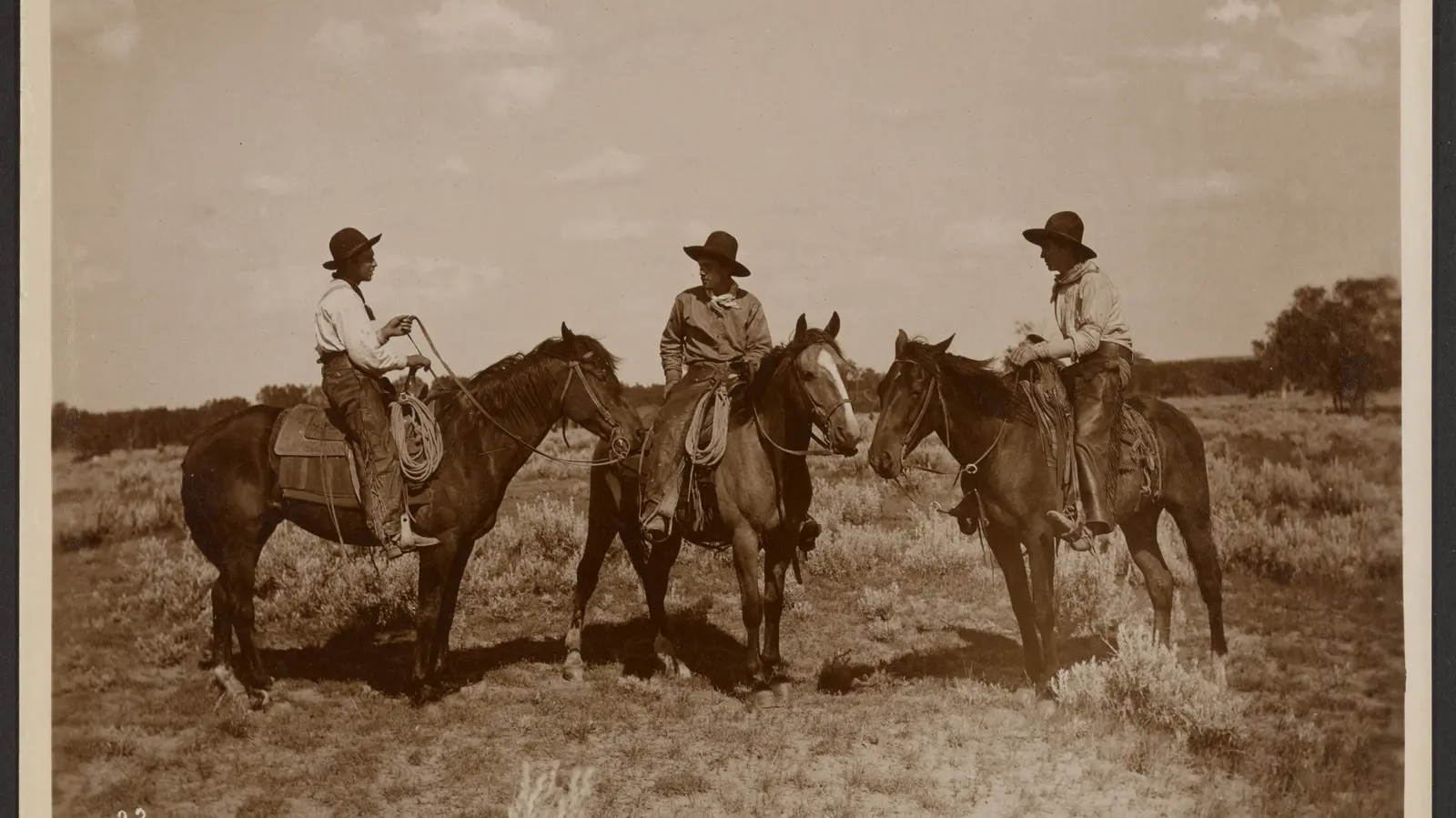
If you picture a Wild West cowboy, you might imagine a Stetson, spurs, a saddle, and a lasso. Those items certainly existed, but the real cowboy's daily life depended on many less glamorous tools and technologies. During the second half of the 19th century, the American frontier was being transformed by inventions that affected everything from communication to food preservation to transportation. Cowboys drove cattle across huge distances, and their ability to do that work safely and profitably was connected to broader innovations in American industry. The five technologies below may not appear in every Hollywood western, but they played an outsized role in making cowboy life possible.
Key facts
- The electric telegraph sent its first official message in 1844.
- Canning allowed food to be preserved and transported over long journeys, changing cattle drive provisions.
- Metallic cartridges replaced slower paper cartridges, making guns safer and faster to load.
- Repeating rifles and revolvers such as the Winchester 1873 and Colt Single Action Army became widely available.
- Railroads connected western cattle herds to eastern markets, creating cow towns along the routes.
The Telegraph
Throughout history, humans developed ways to communicate quickly over long distances, from smoke signals to semaphore. The electric telegraph, however, was a genuine revolution. It sent its first official message in 1844, allowing a message to cross vast distances at nearly the speed of light. The American West was enormous, remote from the eastern government, and still being settled. The telegraph helped close that gap. Instead of waiting for riders or word of mouth, cattle towns and trail operators could receive updated prices, standardized time zones, train schedules, and news almost as it happened. For cowboys, the telegraph was important even if they never touched one. Their work depended on getting cattle to railway depots, and those trains ran on schedules coordinated by telegraph. Beef prices at eastern markets could be transmitted west quickly, helping ranchers and trail bosses decide when and where to sell. Western Union also began offering money orders as early as 1870, so cowboys could send earnings home. The telegraph changed supply chains in ways that rippled through the frontier economy.
Canning
Today canned food is so ordinary it hardly gets noticed. In the 19th century, it was a major breakthrough. Before canning, food spoiled quickly, limiting how far people could travel and how long they could store provisions. By heating food and sealing it in airtight containers, canning made long journeys possible without frequent stops for fresh supplies. Canned meat, fish, vegetables, and fruit became familiar on the American frontier. Cowboys on long cattle drives often ate from a chuck wagon, a mobile kitchen stocked with beans, coffee, and canned goods. Brands such as Campbell's Soup began in the late 1800s, and a cowboy could easily have eaten foods that are still pantry staples today. This does not mean canned food was always perfect. Poorly processed cans sometimes contained spoiled food, and public trust took time to build. Still, canning expanded a cowboy's menu and helped sustain crews far from town.
Metallic cartridges for firearms
Before metallic cartridges, soldiers and hunters used paper cartridges containing gunpowder and a ball. Loading a musket took about a minute, and wet conditions could ruin the powder. The Civil War was fought with these limitations. The development of metallic cartridges, with a brass case holding powder, primer, and bullet together, changed firearms forever. A shooter could reload much faster, keep ammunition dry, and reduce the risk of misfires. For cowboys, this mattered on the trail. They faced predators, cattle rustlers, and other dangers, and law enforcement was often miles away. A quick-loading gun could be the difference between life and death. The word vigilante came from this era because communities sometimes took justice into their own hands. Metallic cartridges also made firearms more reliable in wet weather, which was important along rivers and during storms. A cowboy's gun was a tool for self-defense and for protecting a herd that belonged to the ranch owner. It was not always used in dramatic shootouts, but it was an essential piece of equipment.
Repeating rifles and revolvers
Alongside metallic cartridges, firearms themselves improved. Early single-shot guns required a reload after every shot. Repeating rifles and revolvers let a person fire multiple rounds before reloading. Smith & Wesson and Winchester became household names. A cowboy in the 1870s might carry a Winchester 1873 rifle or a Colt 1873 revolver, also known as the Colt Single Action Army. These weapons were powerful tools for the frontier. But the reality of cowboy gun use is more complicated than popular myth. Early repeaters could be finicky; misfires happened, and accidental shootings were common. Gun violence was not as rampant as movies suggest. In fact, some towns passed strict gun laws. Tombstone, for example, restricted firearms and open carrying. A cowboy visiting town might be required to check his weapon with a lawman before beginning his stay. The image of every cowboy swaggering through town with a six-shooter is partly Hollywood fiction. Even so, the availability of repeating firearms and metallic cartridges gave cowboys a level of firepower and personal security their predecessors did not have.
Railroads
Railroads were perhaps the most important technology of the 19th century. Locomotives could move heavy cargo long distances quickly and reliably, and this transformed the American economy. Beef demonstrates why railroads mattered to cowboys. Eastern cities had a growing demand for beef, while the West had massive herds of longhorns. To connect the two, cowboys drove thousands of cattle along trails such as the Chisholm Trail to railroad depots. The journey was dangerous, crossing rivers, plains, and mountains in all kinds of weather. Once the cattle reached a cow town, they were loaded into cattle cars and shipped east to slaughterhouses. Cow towns grew up to serve the exhausted cowboys who ended these long drives. These towns had muddy streets, saloons, and sometimes violent clashes between lawmen and armed men. When the cattle drives eventually slowed, many cow towns found other ways to prosper. The railroad made the cowboy's job economically valuable. Without it, there would have been little reason to move thousands of animals overland. Many cowboys may never have ridden a train themselves, but their entire profession was built around making sure the railroad could deliver beef to distant markets.
Source:SlashGear News