

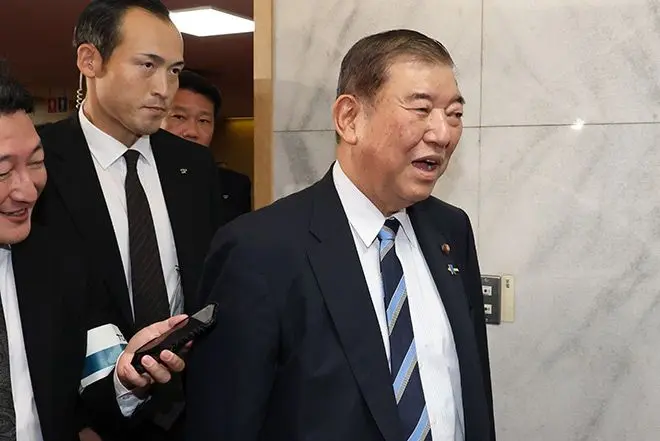
Shigeru Ishiba, president of the ruling Liberal Democratic Party, is preparing to form a new Cabinet that will feature 13 first-time ministers, including two women, and will exclude every lawmaker connected to the party's fundraising scandal, according to sources familiar with the plans.
Ishiba, 67, a former defense minister and LDP secretary-general, is expected to be elected prime minister at an extraordinary Diet session convened on Oct. 1. His administration is likely to be inaugurated on the same day, marking a significant shift in Japan's political landscape.
Key Appointments
Takeshi Iwaya and Gen Nakatani, both former defense ministers and close allies of Ishiba, have been selected as foreign minister and defense minister, respectively, the sources said. Iwaya, 67, and Nakatani, 66, will be entrusted with carrying out Ishiba's ambitious policy agenda, including negotiations on revising the Japan-U.S. Status of Forces Agreement and establishing an Asian version of the North Atlantic Treaty Organization.
The two female Cabinet members will be Junko Mihara, who will take charge of policies related to children, and Toshiko Abe, who will hold the education portfolio. Mihara, 60, previously served as state minister of health, labor and welfare, while Abe, 65, currently serves as state minister of education, culture, sports, science and technology. Their appointments are notable in a political landscape where female representation in Cabinet has often been limited.
Background of the Fund Scandal
In the political fund scandal that has rocked the LDP, 85 party lawmakers and others failed to report a total of 579 million yen ($4 million) in proceeds from fund-raising parties over five years through 2022, according to an LDP investigation. The revelation triggered public outrage and further eroded trust in the ruling party. After the scandal came to light, those involved corrected their political fund income and expenditure reports to declare the previously unreported revenue.
By excluding all lawmakers implicated in the scandal from his Cabinet, Ishiba aims to signal a break from the past and restore confidence in the government. This decision is seen as a calculated move to address one of the key concerns raised by the public and opposition parties during the LDP presidential election campaign.
Rewarding Endorsers
The new Cabinet will feature many lawmakers who enabled Ishiba to run in the Sept. 27 LDP leadership contest by providing the required personal endorsements. These include Seiichiro Murakami, 72, who will become minister for internal affairs and communications; Yasuhiro Ozato, 66, who will serve as agriculture minister; and Masaaki Taira, 57, who will be minister for digital transformation.
Other notable selections include Hideki Makihara, 53, as justice minister; Takamaro Fukuoka, 51, as health, labor and welfare minister; and Yoji Muto, 68, as economy, trade and industry minister. Tetsuo Saito, 72, of Komeito, the LDP's junior coalition partner, will retain the land, infrastructure, transport and tourism portfolio, underscoring the coalition's stability.
LDP Leadership Reshuffle
For the party leadership lineup inaugurated on Sept. 30, Ishiba appointed former Prime Minister Yoshihide Suga as vice president, replacing Taro Aso, another former prime minister, who became a supreme adviser. Relations between Ishiba and Aso have been strained since 2009, when Ishiba, serving as agriculture minister in the Aso Cabinet, demanded that the unpopular prime minister resign.
Aso, 84, had thrown his support behind Sanae Takaichi, minister in charge of economic security, in the runoff vote of the LDP leadership contest. Despite this, Ishiba, who was the runner-up in the first round of voting but edged out Takaichi in the runoff by 21 votes, hopes to promote reconciliation within the party by appointing Aso as supreme adviser. This move is reminiscent of past practice, as former Prime Ministers Nobusuke Kishi and Takeo Fukuda were also appointed to this honorary role.
Ishiba also appointed Finance Minister Shunichi Suzuki, a member of the Aso faction, as chairman of the General Council, the LDP's top decision-making body. This appointment is widely seen as an olive branch to the Aso faction and a step toward unifying the party after a contentious leadership race.
Rivals Offered Posts
A record high nine candidates ran in the LDP presidential election, reflecting the party's increasingly fragmented internal landscape. At a news conference after his election, Ishiba said he intends to ask the eight rivals to assume posts suited to them. Takaichi, 63, was offered the post of chair of the General Council, but she declined, according to sources. Takayuki Kobayashi, a former minister in charge of economic security who placed fifth in the leadership contest, also declined the offer to become chair of the LDP's Public Relations Headquarters.
Despite these refusals, Ishiba has managed to fill key party positions with experienced lawmakers. Itsunori Onodera, 64, a former defense minister, will chair the Policy Research Council, while Shinjiro Koizumi, 43, will lead the Election Strategy Committee. Tetsushi Sakamoto, 73, will chair the Diet Affairs Committee, and Yuko Obuchi, 50, will head the Party Organization and Campaign Headquarters. Takuya Hirai, 66, will serve as chair of the Public Relations Headquarters.
Policy Priorities
Ishiba's administration is expected to focus on national security and constitutional reform, areas he has long championed. His proposal to revise the Japan-U.S. Status of Forces Agreement aims to address longstanding grievances in Okinawa and other host communities. The idea of an Asian NATO, while ambitious, is likely to face diplomatic challenges given the region's complex security dynamics and divergent interests among potential members.
Domestically, the new Cabinet will need to address economic revitalization, demographic decline, and social security reform. The appointment of Ryosei Akazawa, 63, as minister in charge of economic revitalization, and Minoru Kiuchi, 59, as minister in charge of economic security, indicates a focus on both growth and resilience. Tadahiko Ito, 60, will serve as reconstruction minister, tasked with overseeing recovery efforts in areas affected by the 2011 Great East Japan Earthquake, while Manabu Sakai, 59, will chair the National Public Safety Commission, overseeing police and public safety policies.
Expected Cabinet Lineup
Here is the expected full lineup of the Ishiba Cabinet, based on official announcements from the Liberal Democratic Party and coalition partners:
- Prime Minister: Shigeru Ishiba, 67, Lower House, LDP
- Minister for Internal Affairs and Communications: Seiichiro Murakami, 72, Lower House, LDP
- Justice Minister: Hideki Makihara, 53, Lower House, LDP
- Foreign Minister: Takeshi Iwaya, 67, Lower House, LDP
- Finance Minister: Katsunobu Kato, 68, Lower House, LDP
- Minister of Education, Culture, Sports, Science and Technology: Toshiko Abe, 65, Lower House, LDP
- Minister of Health, Labor and Welfare: Takamaro Fukuoka, 51, Upper House, LDP
- Minister of Agriculture, Forestry and Fisheries: Yasuhiro Ozato, 66, Lower House, LDP
- Minister of Economy, Trade and Industry: Yoji Muto, 68, Lower House, LDP
- Minister of Land, Infrastructure, Transport and Tourism: Tetsuo Saito, 72, Lower House, Komeito
- Environment Minister: Keiichiro Asao, 60, Upper House, LDP
- Defense Minister: Gen Nakatani, 66, Lower House, LDP
- Chief Cabinet Secretary: Yoshimasa Hayashi, 63, Lower House, LDP
- Minister for Digital Transformation: Masaaki Taira, 57, Lower House, LDP
- Reconstruction Minister: Tadahiko Ito, 60, Lower House, LDP
- National Public Safety Commission Chairman: Manabu Sakai, 59, Lower House, LDP
- Minister for Policies Related to Children: Junko Mihara, 60, Upper House, LDP
- Minister in charge of Economic Revitalization: Ryosei Akazawa, 63, Lower House, LDP
- Minister in charge of Economic Security: Minoru Kiuchi, 59, Lower House, LDP
- Minister for Okinawa and Northern Territories Affairs: Yoshitaka Ito, 75, Lower House, LDP
Note: Those marked with a hash symbol are joining a Cabinet for the first time. In this list, they include Hideki Makihara, Toshiko Abe, Takamaro Fukuoka, Yasuhiro Ozato, Yoji Muto, Keiichiro Asao, Masaaki Taira, Tadahiko Ito, Manabu Sakai, Junko Mihara, Ryosei Akazawa, Minoru Kiuchi, and Yoshitaka Ito.
Party Leadership Lineup
The following is the lineup of the LDP leadership, which was formally announced on Sept. 30:
- Supreme Adviser: Taro Aso, 84, Lower House
- Vice President: Yoshihide Suga, 75, Lower House
- Secretary-General: Hiroshi Moriyama, 79, Lower House
- Chair of General Council: Shunichi Suzuki, 71, Lower House
- Chair of Policy Research Council: Itsunori Onodera, 64, Lower House
- Chair of Election Strategy Committee: Shinjiro Koizumi, 43, Lower House
- Chair of Diet Affairs Committee: Tetsushi Sakamoto, 73, Lower House
- Chair of Party Organization and Campaign Headquarters: Yuko Obuchi, 50, Lower House
- Chair of Public Relations Headquarters: Takuya Hirai, 66, Lower House
With this new lineup, Ishiba is seeking to balance various factions within the LDP while advancing his own policy priorities. The new government will face immediate challenges, including restoring public trust in politics, managing economic uncertainties, and navigating a complex security environment in the Indo-Pacific region.
The appointment of Yoshimasa Hayashi as Chief Cabinet Secretary, a seasoned politician with experience in foreign affairs and defense, underscores the Ishiba administration's emphasis on policy continuity and coordination. Hayashi, 63, will serve as the government's top spokesperson, likely playing a critical role in communicating the administration's decisions and managing crisis responses.
As the Ishiba Cabinet prepares to take office, attention will turn to how the new government balances its reformist aspirations with the practical realities of coalition governance and parliamentary dynamics. The exclusion of scandal-linked lawmakers is a positive first step, but the administration's long-term viability will depend on its ability to deliver concrete results and address the concerns of the Japanese public.
Source:The Asahi Shimbun News