

A Political Wake-Up Call
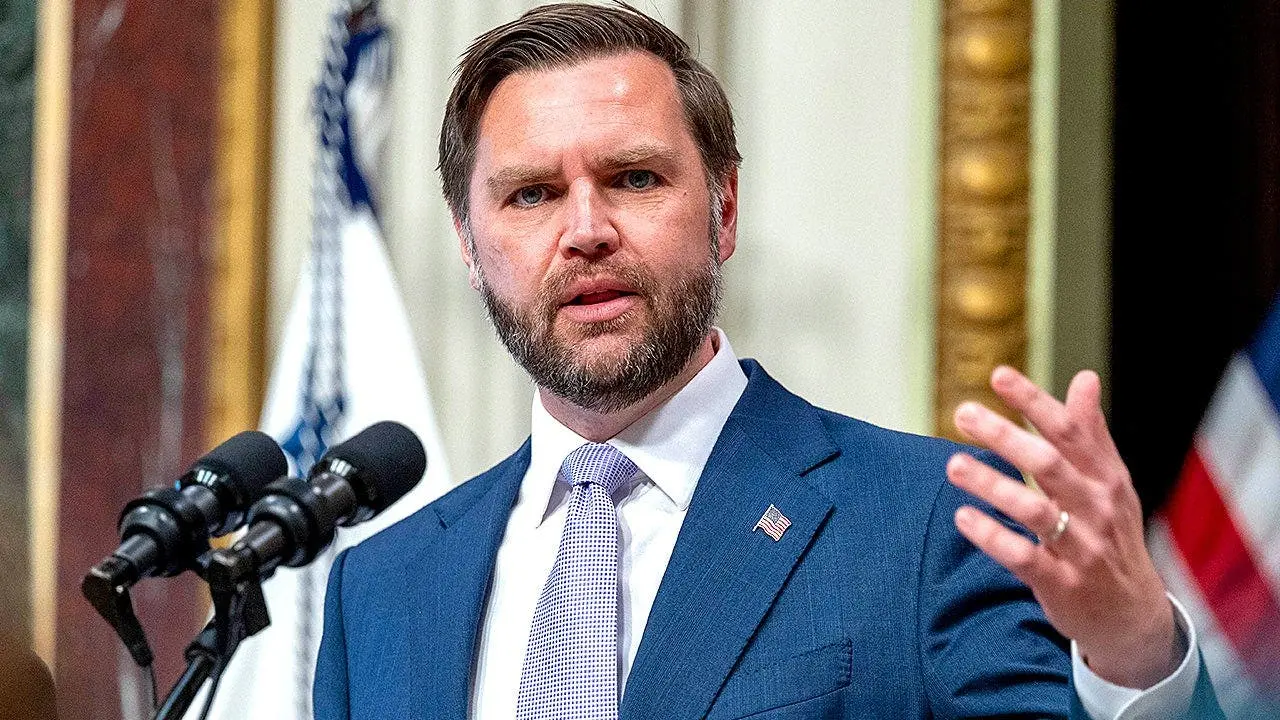
Vice President JD Vance delivered a blunt warning to Republicans on Thursday, telling them they have no one to blame but themselves if young Americans continue to drift toward socialism. Appearing on 'The Will Cain Show,' Vance argued that dismissing the economic frustrations of younger generations would be a catastrophic political mistake.
'My warning to my fellow Republicans would be: If we don't get this right, don't blame young people for being sympathetic to socialism. We've got to blame ourselves,' Vance said.
The vice president's remarks come at a moment when the Democratic Socialists of America (DSA) has been scoring notable primary victories and advancing a left-wing economic agenda that resonates with voters under 40. Recent primary results in Michigan, Minnesota, and Wisconsin underscored the growing influence of socialist-backed candidates within the Democratic Party, even as some experienced setbacks.
Socialist Candidates Gaining Ground
In Michigan, Abdul El-Sayed, a former Detroit health director who embraced left-wing economic policies, won a crucial Democratic U.S. Senate primary. El-Sayed's campaign centered on universal healthcare, student debt cancellation, and aggressive action on climate change. His victory was seen as a sign that progressive economic messaging can still mobilize voters in a key Midwestern battleground.
Minnesota Lieutenant Governor Peggy Flanagan also scored a Democratic U.S. Senate primary victory, aligning herself with the party's progressive wing on issues such as paid family leave and affordable housing. Flanagan's success added to the narrative that socialist-aligned policies are capturing the imagination of Democratic primary voters.
However, the outcome in Wisconsin told a more complicated story. DSA member Francesca Hong lost her Democratic gubernatorial primary, a defeat that some observers attributed to electability concerns. Hong's campaign had proposed sweeping tax increases and the elimination of private health insurance, but voters in the state appeared more cautious about embracing such a radical agenda.
Despite that loss, the overall trajectory has alarmed many Republicans. The DSA's growing grip on the Democratic Party's institutional machinery has prompted a fierce ideological battle, and Vance is now arguing that the GOP cannot simply attack socialism without offering a compelling alternative.
A Problem of Opportunity
Vance, who described socialism as 'dangerous and destructive,' insisted that Republicans must acknowledge the real economic anxieties fueling its appeal among young Americans. He pointed to the enormous generational gap in homeownership, education costs, and the ability to start a family as central issues that cannot be ignored.
The median price for a single-family home in the United States now exceeds $430,000, according to recent data from Redfin analyzed by Forbes. For many young people, that figure puts homeownership out of reach, especially in the face of student loan debt and stagnant wage growth. By contrast, their parents' generation was able to buy homes, build equity, and achieve a measure of financial security that now seems elusive.
'I would say to that young person that you as an American citizen deserve to have a good life in this country, and you deserve to have a government that is making it easier for you to start a family, for you to afford to get a good education, for you to have a good job, for you to afford a home,' Vance said.
That message was aimed not only at young voters but also at Republican lawmakers who have often responded to socialist rhetoric with free-market slogans. Vance said those slogans are not enough.
'You don't stop socialism by throwing slogans at people about the free market,' he said. 'As much as I love the free market, you stop socialism by making people's lives better, and that's what we're trying to do every single day.'
Addressing the Economic Roots
The vice president's comments highlight a growing recognition within the conservative movement that economic populism must be part of the GOP's answer to socialism. Housing affordability, educational costs, and access to good-paying jobs have become defining issues for young voters, and both parties are competing heavily for the so-called 'hopeless' Generation Z cohort.
Recent polls show that a significant number of young Americans hold favorable views of socialism, a trend that has unsettled conservative strategists. While some Republicans have called for tougher rhetoric against leftist ideology, Vance argued that the more effective response is to deliver tangible economic results.
The Trump administration has pointed to efforts to stabilize housing prices and unleash investment in domestic manufacturing as evidence that its policies are beginning to help. Vance touted what he described as 'trillions of dollars of new investment into this country, which means good, middle-class jobs for young people, middle-income people all across our country.'
He also acknowledged that the administration's housing package had been a point of contention even within the GOP. Earlier this year, angry Republicans accused Trump of handing Democrats a political victory after he blew up a housing package that would have addressed zoning reform. The failed bill exposed internal divisions over how aggressively to tackle the housing crisis.
The Battle for the Future of the Democratic Party
While Vance's remarks were directed primarily at Republicans, they also underscored the ongoing struggle within the Democratic Party over its ideological direction. The DSA's support for candidates like El-Sayed and Flanagan has pulled the party further left on economic questions, prompting pushback from more centrist Democrats.
The recent primary defeats of some DSA-backed candidates, including Hong in Wisconsin, suggest that there are limits to the socialist brand's electoral appeal. Yet the victories in Michigan and Minnesota show that progressive economic messages can still energize the party's base.
Democrats are now weighing whether to embrace the left wing or chart a more moderate course for the general election. Republicans, meanwhile, are trying to figure out how to counter the economic narrative that socialist candidates are selling to young people.
Vance's answer is simple: Republicans must show they understand the economic struggles that young Americans are experiencing. If the GOP can make that case credibly, he argued, it can win over voters who might otherwise be tempted by socialism.
'We're seeing trillions of dollars of new investment into this country,' he said, emphasizing that the administration's policies are aimed at creating good jobs and making life more affordable. The question is whether that message will resonate with a generation that feels left behind.
A Challenge for the GOP
The vice president's remarks serve as a challenge to the conservative movement to articulate a vision that goes beyond abstract commitments to free markets. Vance effectively argued that the GOP must become a party of problem-solvers, capable of addressing the concrete material needs of ordinary Americans.
That includes but is not limited to housing. Education costs, healthcare expenses, and the rising cost of raising a family all contribute to the sense of economic precarity that makes socialist promises attractive. Vance said young Americans deserve a government that works for them, and he insisted the Trump administration is trying to deliver exactly that.
Whether the administration can achieve those goals remains an open question, but Vance made clear that Republicans need to stop blaming the victims of economic change. If the party fails to offer a compelling vision, he said, it will have no one to blame but itself.
Source:Fox News News