

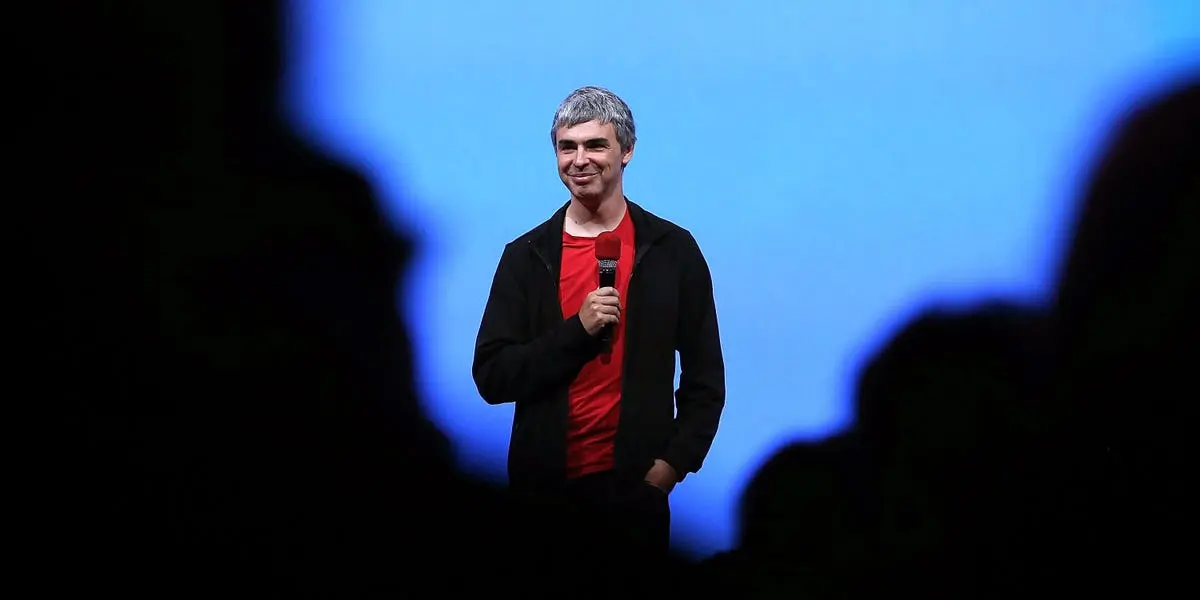
Google cofounder Larry Page has formally cut many of his financial ties to California, a move that comes as the state weighs a ballot measure that would impose a new wealth tax on billionaires.
Filings with California and Delaware show that Page’s family office, Koop, was converted out of California in late December and reincorporated in Delaware. The conversion was completed before the end-of-2025 deadline that would have left Page subject to a proposed retroactive tax on billionaires if the ballot measure passes later this year.
The California measure, if approved by voters in November, would apply a 5% annual tax on the assets of any California resident whose net worth exceeds $1 billion. Under the proposed law, the tax would take effect retroactively for individuals living in California as of January 1, 2026. For Page, who has been reported to be the second-richest person in the world, the tax could represent a significant annual cost.
Page’s move is about more than just his personal residence. The corporate filings show a broad restructuring of entities linked to the billionaire and his family, from aviation and medical research ventures to charitable organizations.
A wave of Delaware conversions
According to filings, Page converted several entities from California to Delaware. Among them is Flu Lab LLC, a vehicle Page has used to fund research focused on tackling influenza. The entity lists its principal office address in Nevada. Another entity, One Aero, which has funded flying car ventures, lists its principal office address in Florida.
Dynatomics LLC, a startup Page launched in 2023 to apply artificial intelligence to aircraft manufacturing, was also converted from California to Delaware, with a new principal address in Keller, Texas. A source close to Page said the Dynatomics team, run by Chris Anderson, continues to work out of California even though the company’s corporate home has changed.
The filings also show that Oceankind, a marine-conservation charity founded by Page’s wife, scientist Lucinda Southworth, converted from California to Delaware in December. In addition, an LLC that Page had used to purchase islands in Puerto Rico and the Virgin Islands was moved from California to Delaware, with a new mailing address in Florida. A separate LLC used to buy an island in Fiji was also converted to Delaware.
Delaware is a favored jurisdiction for many wealthy individuals and businesses. The state offers a favorable tax structure, strong privacy protections, and a specialized court system for corporate disputes. Delaware does not require LLCs to disclose the names and addresses of directors at the time of incorporation, giving owners an extra layer of privacy. That privacy is likely valuable to Page, whose family office is known for operating with an unusually high degree of secrecy.
Why the billionaire tax prompted the move
California’s proposed wealth tax is not yet law, but the possibility has already prompted concern among some residents and business leaders. The measure was designed to raise significant revenue from the state’s wealthiest taxpayers, but critics argue it could drive those taxpayers and their companies out of California.
Under California law, residency is not determined simply by where a person is registered to vote or where they own a home. The state looks at the nature and extent of a person’s ties to California, including how much time they spend in the state and whether they maintain substantial business interests there. By moving his family office and several business entities out of California, Page is reducing the arguments that he remains a California resident for tax purposes.
A source close to Page said the Google cofounder had already left California, although it could not be learned whether the move is temporary. Page has previously been associated with residences in California and other states, and his plans could evolve depending on the outcome of the tax measure and other factors.
Background on Larry Page and his wealth
Larry Page cofounded Google with Sergey Brin in 1998 while both were PhD students at Stanford University. The company grew from a search engine into one of the most valuable technology companies in the world, with products spanning online advertising, cloud computing, smartphones, and autonomous vehicles through its Waymo unit. Page served as CEO of Google and later Alphabet, the holding company created in 2015 to oversee Google and its various bets. He stepped down as CEO of Alphabet in 2019 and handed day-to-day control to Sundar Pichai, but he remains a major shareholder and remains deeply influential in the technology world.
According to a major global wealth ranking, Page is the second-richest person in the world, with a fortune largely tied to Alphabet stock. His wealth has allowed him to fund a wide range of ventures outside Google, including new modes of transportation and health-related research.
Page has long been private about his personal life and financial affairs. His family office, Koop, manages a substantial portion of his wealth and investments. The office is led by CEO Wayne Osborne and is known for keeping an exceptionally low public profile. The recent conversions of Koop and related entities are consistent with that approach.
Reactions to the proposed tax
The proposed billionaire tax has drawn opposition from prominent leaders in venture capital, politics, and technology. Venture capitalist Vinod Khosla said on social media that the measure would mean California loses its most important taxpayers and would be worse off as a result. He argued that a wealth tax would cause long-term damage unless the state legislature bans such taxes, and suggested that equalizing taxes on work income and capital gains at the national level would be a better approach.
Matt Mahan, the Democratic mayor of San Jose, described the tax this week as a political plan that would sink California’s innovation economy. His comment underscored the divide between those who see a wealth tax as a necessary tool for funding public services and those who fear it will push capital and jobs out of the state.
David Sacks, the White House AI czar and a prominent venture capitalist, has also criticized the proposal and warned that it would backfire. Sacks said Miami and Austin will eventually overtake New York and San Francisco as centers for finance and technology, and he recently announced that his venture capital firm, Craft Ventures, had opened an office in Austin. His criticism reflects a broader debate over how California can balance revenue needs with retaining its position as the world’s leading technology hub.
Last month, celebrity lawyer Alex Spiro sent a letter to California Governor Gavin Newsom warning that the billionaire tax would trigger an exodus of capital and innovation from California. Spiro’s letter echoed concerns raised by other business leaders who argue that wealthy residents have a significant influence on the state’s economy and job creation.
What the filings mean for Page’s future
The corporate conversions are a strong signal that Page is serious about changing his tax status. By moving his family office, charitable entity, and several investment vehicles to Delaware, he has taken the kind of concrete steps that tax authorities consider when determining residency. The new addresses in Texas, Florida, and Nevada also point to a broader geographic footprint beyond California.
Page still has personal and professional connections to California. The Dynatomics team reportedly continues to operate from the state, and Page’s involvement with Google and Alphabet has historically kept him connected to Silicon Valley. However, the filings suggest that Page and his advisers are actively seeking to minimize his exposure to California taxes at a time of policy uncertainty.
Whether other billionaires will follow Page remains to be seen. The California tax proposal has become a flashpoint in the national conversation about wealth inequality and tax policy. Supporters of the measure argue that the state’s public services benefit everyone and that the wealthiest residents should pay more. Opponents counter that taxing unrealized wealth at the state level is impractical and likely to drive taxpayers to lower-cost states. The outcome of the November vote will determine whether Page’s move proves to be a successful strategy or a precautionary step in a longer fight.
Source:Business Insider News