

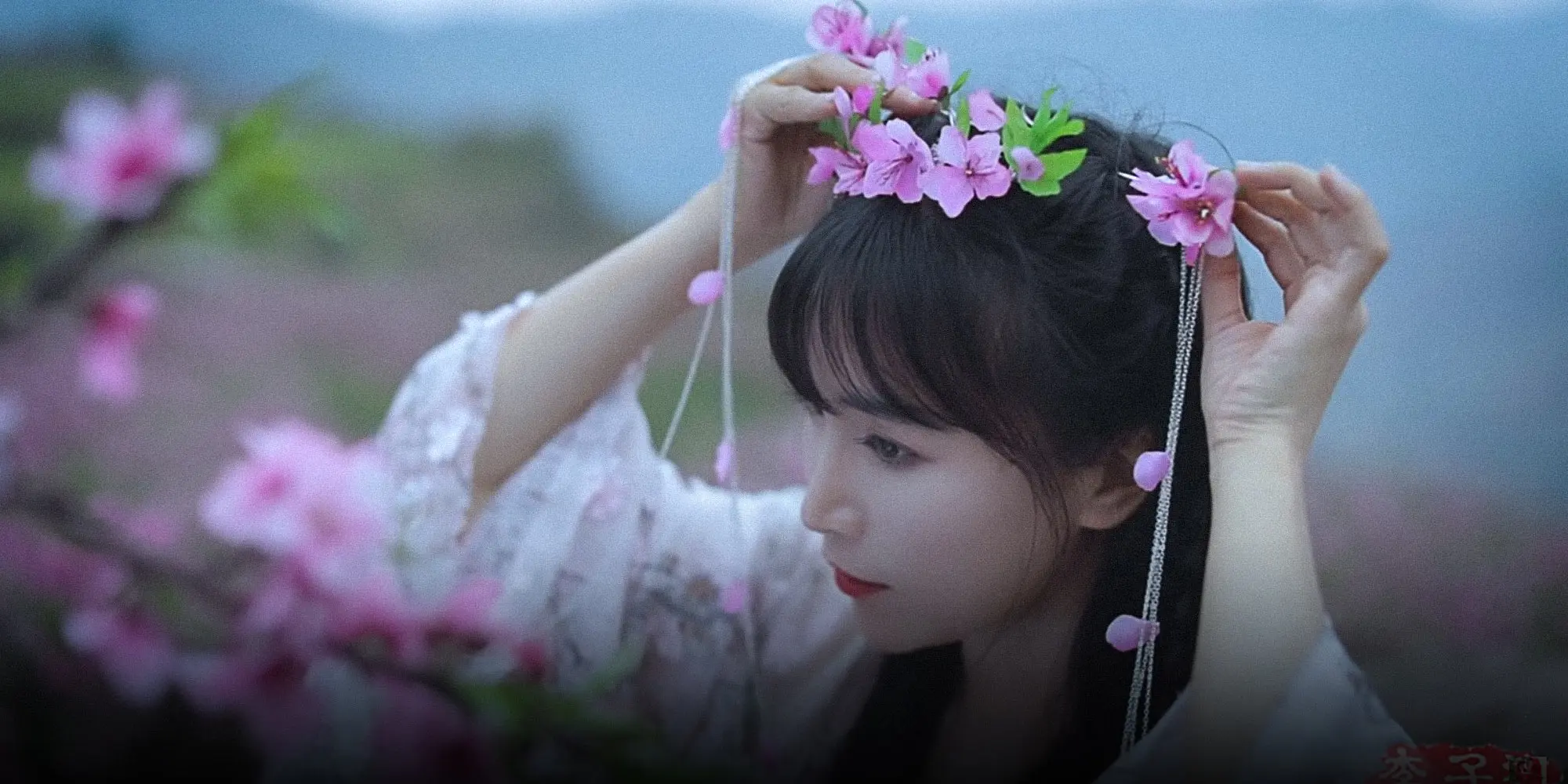
When the world locked down in 2020, a quiet farmer in China’s southwestern countryside seemed to heal all wounds. Li Ziqi, a vlogger whose videos offer wordless glimpses of an idealized pastoral life, saw her audience expand dramatically during the pandemic. Her YouTube and TikTok channels have accumulated billions of views, making her one of a small group of Chinese creators with true global reach. She picks vegetables before sunrise, cooks them over a wood fire, and records the seasons changing in luminous time-lapses. To many viewers, she represents a simpler, more authentic way of living.
But Li is not simply a documentarian of rural China. Her videos are carefully composed, and the version of nature she presents is free of mosquitoes, mud, and boredom. Some critics call her a Disney princess for the streaming era. It is tempting to accept that description, but it is misleading. It is not Li who resembles Disney princesses; it is the Disney princesses who resemble her. She is not a realist, but a Romantic—with a capital R.
Key Facts
- Li Ziqi is a Chinese lifestyle vlogger with billions of combined views on TikTok and YouTube.
- Her videos depict an idealized, mostly wordless rural life in southwestern China.
- Her appeal is best understood through Romanticism, the 19th-century artistic movement that rejected industrialization and celebrated nature, emotion, and solitude.
- A person from a village near Li’s home said her videos are ‘70% real,’ suggesting heavy staging and enhancement.
- Li’s self-sufficiency—making baskets, growing vegetables, and shearing sheep—appeals to viewers alienated from modern labor.
- Philosopher Niklas Luhmann’s concept of ‘second-order observation’ explains why viewers project themselves onto Li.
- In a 2019 video, Li briefly breaks the fourth wall, looking into the camera with a weary expression, revealing the anxiety underneath the fantasy.
The Meaning of Romanticism
Romanticism emerged in the early 19th century as a reaction to industrialization, urbanization, and the rationalization of everyday life. Its emblematic image is Caspar David Friedrich’s 1818 painting The Wanderer Above the Sea of Fog, in which a solitary figure stands above a vast, misty landscape. The Romantics regarded nature as a source of enchantment, not a collection of resources. They believed that emotion, solitude, and communion with the natural world could serve as antidotes to pollution, contagion, and death. That worldview gradually faded, but the 21st century has seen a revival, accelerated by the COVID-19 pandemic and the growing awareness of climate change. People are trying to appease nature by watching more of it.
Li Ziqi fits perfectly into this revived Romanticism. In her videos, nature is never abrasive. It is generous, pristine, and occasionally even saccharine. She makes peach blossom crowns, presses oil from seeds, and builds a brick oven from clay. The natural world in her videos seems to cooperate with her intentions, as if the seasons themselves exist to supply her kitchen.
How real is this vision? The question is difficult to answer. A man who claimed to come from a village near Li’s home in northern Sichuan said her videos were ‘70% real.’ He smiled as if sharing a secret. That percentage suggests a substantial amount of staging, framing, and enhancement. But Li’s artificiality is not necessarily a flaw; it is part of the Romantic tradition. She presents nature as it should feel, not as it actually is. The sensual is absorbed into the spiritual, producing desire while also satisfying it.
Escape and Alienation
The allure of Li’s videos lies in their promise of control. She always seems to know exactly what to do. If she needs a basket, she makes one. If she wants a new dress, she grows cotton, spins thread, and sews it herself. Her cabbages are perfectly formed, her cured meats hang in orderly rows, and her herbal medicines are labelled with care. Even the moon and stars appear on schedule in her time-lapses, moving across the sky to match the rhythm of her activities. This is not an accurate portrait of rural work, but it is a comforting fantasy of self-sufficiency.
Li’s viewers, by contrast, are often people who feel alienated from their own labor. They may sit in offices, produce intangible services, and rely on systems they barely understand. The fantasy Li offers is that one can start over from zero, relying only on one’s hands and the earth. She digs ditches, composts food waste, builds cabins, and makes shampoo from cucumbers. A viewer who cannot change a flat tire can imagine doing all of this—and looking immaculate while doing it. The filter of social media does not disappear in the fantasy; it is simply transplanted onto rural life.
There is something Marxian about Li’s appeal. Karl Marx argued that human labor is a force of nature, and that people become alienated when they lose control over the products of their work. Li sows, tends, harvests, cooks, and eats her own food. She raises sheep, shears them, and turns the wool into clothing. Work and nature are not separate domains in her world, at least while the camera is rolling. She has started over from scratch, and she appears to be in direct control of her own means of production. The fact that she looks content is a powerful image, because contentment is precisely what alienated viewers lack.
Yet the contentment is also a simulacrum. Viewers project themselves onto Li because she is a blank slate. Her outfits are immaculate and majestic, both fashionable and incongruous with farm work. Her off-camera persona is elusive. This is what philosopher Niklas Luhmann called ‘second-order observation’: humans enjoy watching themselves watch the world. Li has perfected this form of voyeurism by allowing viewers to inhabit her perspective, to imagine themselves as the capable, calm figure in the frame.
The Hidden Technology
To maintain the fantasy, Li makes sure that modern technology rarely enters the frame. It may be implied—there is no way to film a time-lapse without a camera—but it is not shown. This makes the advertisements that interrupt her videos especially jarring. For a few seconds, the viewer is reminded that the experience of nature is highly mediated, delivered through algorithms and monetized attention.
This tension between the natural and the technological is central to Li’s popularity. Romanticism has always been careful to offer just enough glimpses of dystopia to make imagining a better future enjoyable. The dream is not about addressing systemic challenges, which would require collective action. It is about starting over from zero, which seems to require only the individual and, perhaps, a large collection of YouTube tutorials. The fact that starting over feels more plausible than systemic change says a great deal about the current stage of capitalism.
A Break in the Fourth Wall
One of Li’s most telling moments appears in a 2019 video originally titled When You Missed the Good Time to Dig Wild Vegetables, You Also Missed This Spring. The title is clumsy, which may suggest a pure heart or an online translation service. In the video, around the three-minute mark, Li does something unexpected. She breaks the fourth wall and looks directly into the camera for a full second as she gets out of bed. Her gaze is not calm. It is weary, anxious, perhaps even exhausted. The mask of serenity slips, and the viewer sees someone who knows too much.
That moment sets Li apart from Friedrich’s wanderer and the early Romantics. The wanderer stood above the sea of fog, contemplating the unknown with wonder. Li stands at the intersection of a carefully constructed pastoral and a global digital audience. She knows too much. The audience knows too much. YouTube, as a system, knows too much. This awareness is precisely what makes the dream of starting over so compelling. People are anxious with awareness, accursed with algorithm.
Anxiety is difficult to quantify, but contemporary viewers are likely far more anxious than Friedrich’s wanderer ever was, if only because modern people possess more vocabulary to express and be held responsible for it. When Li looks into the camera, she signals that she knows the viewers know. She then gets out of bed, washes her hands, and reassures everyone with a fresh batch of dumplings. That is how her videos often end: with a pleasant meal served, or a beautiful piece of clothing finished. The resolution is not a solution to the world’s problems; it is a soothing promise that one can begin again tomorrow. After all, who only ever eats once?
Source:#SixthTone News