

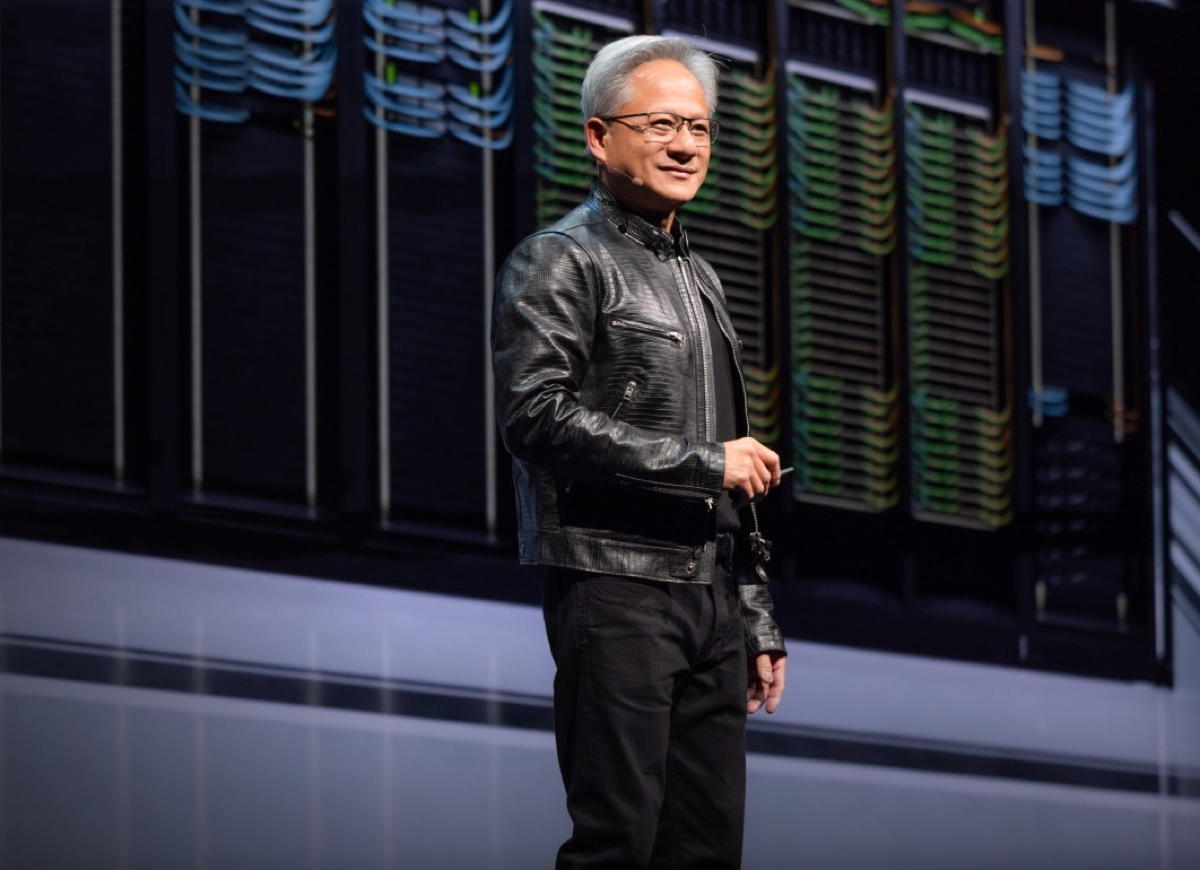
Nvidia chief executive Jensen Huang said the company will “probably” not invest $100 billion (£75bn) in OpenAI, following a much smaller $30bn investment as part of a funding round last week, giving the reason as the AI start-up’s likely IPO sometime this year.
“I think the opportunity to invest $100 billion in OpenAI is probably not in the cards,” Huang said during a Morgan Stanley conference.
Because of the expected IPO, “this might be the last time we’ll have the opportunity to invest in a consequential company like this”, he added.
Huang also addressed Nvidia’s recent $10bn investment in Anthropic, another leading AI company, calling it probably “the last” due to Anthropic’s expected IPO. The comments come after months of intense speculation about the relationship between Nvidia and OpenAI, two of the most prominent players in the generative AI boom.
In September, Nvidia announced plans to invest up to $100bn in Nvidia over several years, with rounds tied to the startup’s successive deployments of Nvidia’s chips in data centers. However, that agreement was never finalised and reportedly stalled in January.
The Changing Economics of AI
Meanwhile, the economics of the AI boom have shifted dramatically. Last year’s optimistic announcements have given way to the realities of building massive data centres essential for powering artificial intelligence technologies. These facilities consume enormous amounts of power, water, and other natural resources, often driving up costs for local residents and generating increasing public backlash.
The infrastructure demands of AI are staggering. A single large language model training run can require tens of thousands of graphics processing units (GPUs) running for weeks or months. Nvidia’s latest H100 GPU, which costs tens of thousands of dollars each, is in such high demand that data centre operators are waiting months for deliveries. The cost to build a state-of-the-art AI data centre can now exceed $1 billion, and these facilities need reliable access to gigawatts of electricity—equivalent to small power plants.
Environmental concerns are mounting. According to recent estimates, AI data centres could consume up to 10% of global electricity by 2030. Water usage for cooling is also a critical issue, particularly in drought-prone regions. Community groups have started protesting new data centre developments, putting pressure on companies like Nvidia and OpenAI to find more sustainable solutions.
Background on Nvidia and the AI Chip Dominance
Nvidia has become the undisputed leader in AI chips, powering everything from ChatGPT to image generators. Founded in 1993 by Jensen Huang, Chris Malachowsky, and Curtis Priem, Nvidia originally focused on 3D graphics for gaming. But the company’s GPUs proved ideal for parallel computing tasks required by neural networks. Huang’s vision of accelerated computing led Nvidia to develop CUDA, a programming platform that made it easy for developers to harness GPU power for non-graphics tasks.
Today, Nvidia holds an estimated 80-90% market share in AI chips. The company’s data center revenue has skyrocketed, reaching $47.5bn in fiscal 2024, up 217% year-over-year. This growth has made Nvidia one of the most valuable companies in the world, with a market capitalisation exceeding $2 trillion.
Huang himself has become a prominent figure in technology, known for his signature leather jacket and energetic keynote speeches at Nvidia’s annual GTC conference. He often speaks about the “iPhone moment” of AI, referring to the sudden mainstream adoption of generative AI tools like ChatGPT that launched in late 2022.
OpenAI’s Meteoric Rise and IPO Speculation
OpenAI, founded in 2015 by Sam Altman, Elon Musk, and others, began as a non-profit research lab with a mission to develop AI safely. After Musk left in 2018, OpenAI created a for-profit arm to attract funding. Microsoft invested $1bn in 2019, followed by billions more over the years. But the launch of ChatGPT in November 2022 changed everything—the tool reached 100 million users in just two months.
Now valued at over $80bn, OpenAI is widely expected to go public in 2024 or 2025. An IPO would provide liquidity for early investors and employees, potentially making it one of the largest tech IPOs in history. Huang’s comment suggests that Nvidia sees this as the last chance to buy into OpenAI before it becomes a public company subject to market scrutiny.
The relationship between Nvidia and OpenAI has been symbiotic. OpenAI relies almost exclusively on Nvidia GPUs to train and run its models. In return, Nvidia has benefited from OpenAI’s demand for chips, which has helped drive the company’s recent growth. But the two companies have also been rivals in some areas—OpenAI has considered developing its own chips, while Nvidia is exploring AI services that could compete with OpenAI’s offerings.
Anthropic and the AI Startup Landscape
Anthropic, founded in 2021 by former OpenAI researchers, including Dario Amodei and Daniela Amodei, focuses on building safe and ethical AI. Its flagship model, Claude, competes directly with ChatGPT. Nvidia’s $10bn investment underscores the importance of AI startups to Nvidia’s ecosystem.
Like OpenAI, Anthropic has attracted major investments from tech giants. Google has invested $2bn, while Amazon and other firms have also participated. The company is reportedly planning an IPO in 2025 or 2026, contingent on meeting certain performance milestones.
The AI startup space is crowded with competitors such as Cohere, AI21 Labs, and Mistral AI. All of them are heavy users of Nvidia chips, creating a captive market for the chipmaker. However, relying on a single supplier for critical hardware has prompted some startups to look at alternatives, such as AMD’s GPUs or custom chips from Google and Amazon.
Potential Market Implications
Huang’s statements have significant implications for both Nvidia and the broader AI market. If Nvidia pulls back from major investments in AI startups, it could slow the pace of funding for these companies. On the other hand, it might allow other investors to step in, potentially at lower valuations.
The news also highlights the financial risks of the AI boom. Nvidia’s decision to limit its exposure to OpenAI suggests that even the biggest tech players are cautious about placing all their bets on a single company. Meanwhile, the IPO timeline for both OpenAI and Anthropic remains uncertain, with regulatory hurdles and potential market conditions playing key roles.
Some analysts believe that if OpenAI goes public, its massive valuation could be a double-edged sword. On one hand, it would provide a strong signal of confidence in the AI sector. On the other, it would subject the company to quarterly earnings pressure, which could conflict with its long-term research goals.
Data Center Economics and Environmental Challenges
Beyond corporate finance, the physical infrastructure required for AI is creating new challenges. A report from the International Energy Agency (IEA) projected that data centre electricity consumption could double by 2026, driven largely by AI workloads. In regions like Northern Virginia, data centres already consume more than 25% of the local power grid.
Water usage is another concern. Data centres use millions of gallons of water daily for cooling, often in areas facing water scarcity. Companies are exploring alternatives like liquid cooling and renewable energy sources, but the transition is slow and expensive.
Local communities have begun pushing back. In places like Atlanta, Amsterdam, and Singapore, residents have protested new data centre projects, citing environmental and aesthetic concerns. Some municipalities have even imposed temporary moratoriums on new facility approvals.
For Nvidia and its partners, these issues represent both a risk and an opportunity. The company has been working on more efficient chips, such as the Blackwell GPU, which promises to deliver up to 25x better energy efficiency for AI inference tasks. But experts say more dramatic improvements are needed to make AI sustainable at a planetary scale.
Despite these hurdles, the AI boom shows no signs of abating. Major companies continue to pour billions into AI development, driven by the potential for competitive advantage and new revenue streams. Huang’s comments may signal a maturation of the industry, where early-stage bets give way to more calculated financial strategies. As the AI bubble begins to deflate, the winners will be those who can balance innovation with fiscal responsibility and environmental stewardship.
The future of AI will be shaped not only by technological breakthroughs but also by the difficult decisions companies make about where and how to invest. Huang’s pragmatic approach to investing in OpenAI and Anthropic may be a preview of a more cautious era ahead.
Source:Silicon UK News