

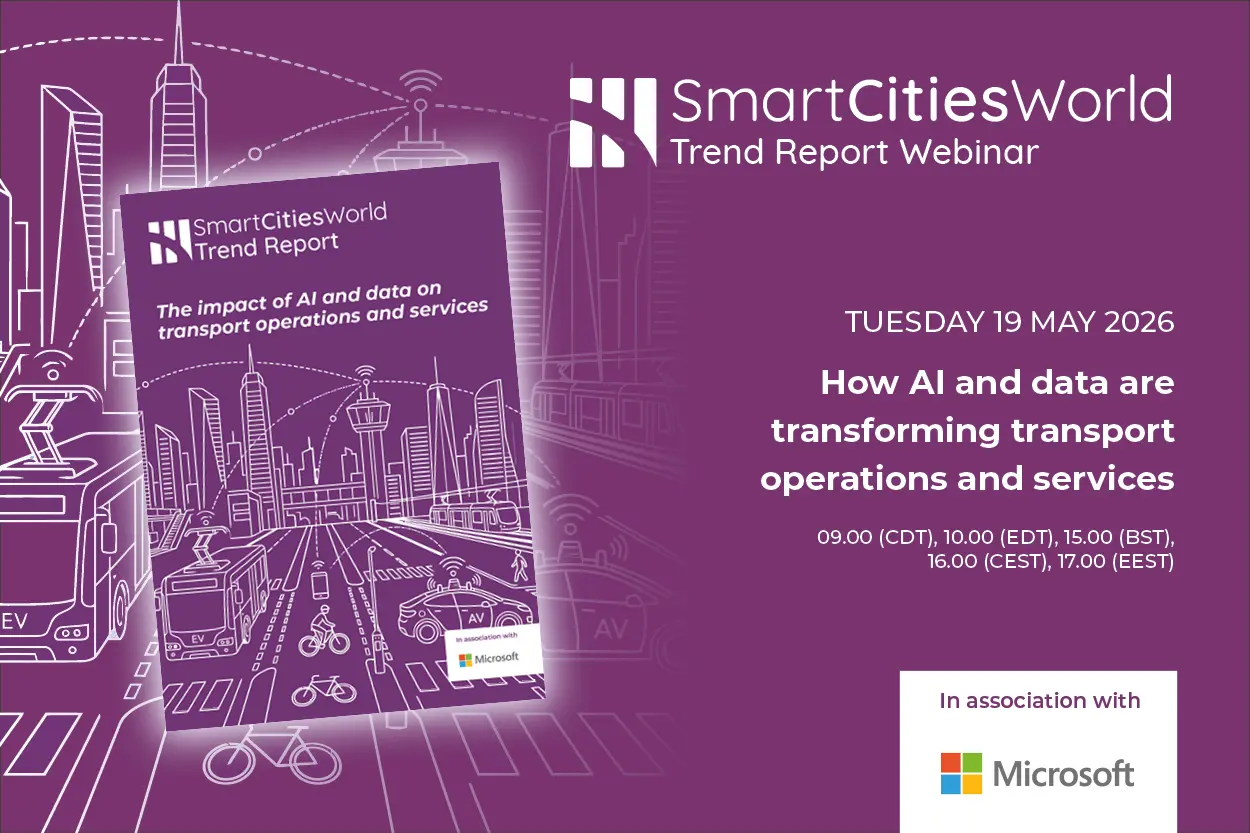
The integration of artificial intelligence and data analytics is fundamentally reshaping urban transport operations and services, offering unprecedented opportunities for efficiency, reliability, and sustainability. As cities worldwide grapple with congestion, emissions, and aging infrastructure, AI-driven solutions are emerging as critical tools for modernizing transit systems and enhancing the commuter experience. A recent SmartCitiesWorld virtual panel, 'Operating smarter: using digital twins and AI to reshape urban infrastructure management,' highlighted how these technologies are not merely incremental enhancements but transformative forces that can redefine how cities manage their transport networks and related services.
Central to this transformation is the role of robust data foundations. Katherine Flesh, a representative from Microsoft, emphasized that while transport agencies are increasingly turning to AI to improve services, the greatest opportunities hinge on strong data foundations, workforce readiness, and responsible governance. Without clean, integrated, and accessible data, even the most advanced AI models cannot deliver reliable insights. Cities must therefore invest in data infrastructure, standards, and literacy to unlock the full potential of AI in transport. This includes everything from real-time traffic data and passenger flow analytics to predictive maintenance of vehicles and infrastructure.
Digital twins and urban infrastructure management
Digital twins – virtual replicas of physical assets, systems, and processes – are becoming a cornerstone of smart city planning. The aforementioned panel discussed how cities can use digital twins to simulate traffic patterns, test congestion mitigation strategies, and optimize public transport routes before implementing changes in the real world. For example, a city could model the impact of a new bus lane or bike-sharing scheme on overall mobility, allowing policymakers to make data-driven decisions. Dublin has embraced this approach, using digital twin projects to improve citizen experiences, reduce traffic, and foster economic growth. These simulations help city planners visualize complex interactions between transport, energy, and land use, ultimately leading to more resilient urban systems.
Smart lighting as a platform for connectivity
Another key theme is the evolution of street lighting into a multipurpose digital infrastructure. The 'Cities Thriving on Lighting' series, in its final episode, explored how global cities are approaching smart lighting and related cybersecurity risks. The second episode of the same series detailed how cities can transform existing streetlight networks into secure, interoperable, and future-proof platforms. Smart lighting does more than save energy – it can house sensors for traffic monitoring, air quality measurement, and public Wi-Fi, serving as a foundation for broader smart city initiatives. However, with increased connectivity comes heightened cybersecurity threats, requiring cities to adopt robust security frameworks from the outset.
Strategic procurement as a tool for resilience
Sam Markey, Founder of Recurve, argues that strategic procurement is one of cities' most underused tools for building resilience, local capacity, and long-term climate impact. When cities procure technology for transport or energy projects, they often prioritize short-term cost savings over long-term value. Markey contends that procurement processes should be redesigned to favor solutions that are scalable, interoperable, and capable of evolving with future needs. This approach not only reduces the risk of stranded assets but also stimulates local innovation and creates economic opportunities. For instance, a city procuring electric buses might also negotiate data-sharing agreements that enable continuous optimization of routes and charging schedules.
Case study: Kansas City Streetcar Authority
Tom Gerend, executive director of the Kansas City Streetcar Authority, shared how the return of rail has reconnected downtown, unlocked riverfront development, and reshaped the city's growth story. The streetcar system, powered by modern data analytics, has not only improved mobility but also spurred economic revitalization. By integrating real-time passenger data with land-use planning, the city has been able to attract new businesses and residents to previously underutilized areas. Gerend's insights underscore that transport projects must be viewed as catalysts for broader urban transformation, not merely as engineering achievements.
City profiles: Sunderland and Dublin
Two city profiles featured in the original content offer deeper dives into smart city strategies. Sunderland is repositioning itself as a leading smart city by leveraging digital infrastructure and low-carbon innovation to build a resilient, future-focused economy. The city has invested in fiber optics, IoT sensors, and data platforms to monitor energy use, traffic flows, and waste management. Meanwhile, Dublin is innovating to improve experiences and services for its communities, with a focus on digital twins, traffic reduction, and economic growth. Both cities demonstrate that a holistic approach – integrating transport, energy, and digital systems – is essential for sustainable urban development.
AI and data in transport: workforce and governance
The successful adoption of AI in transport also depends on workforce readiness. Agencies must train employees to work alongside AI systems, interpret data outputs, and maintain trust in automated decision-making. Microsoft's Katherine Flesh stressed the importance of responsible governance: clear policies on data privacy, algorithmic transparency, and human oversight are non-negotiable. As AI increasingly powers everything from traffic signal control to autonomous shuttle services, cities must establish ethical frameworks that prevent bias and ensure equitable access. Pilot projects, such as AI-driven demand-responsive transit in suburban areas, offer valuable lessons for scaling solutions while maintaining public confidence.
Energy systems and local authority influence
The intersection of transport and energy is another critical area. In a separate virtual panel from the SmartCitiesWorld Summit 2026, experts discussed how energy systems can be shaped by local authorities through renewables, flexibility, storage, and smarter networks. Transport electrification – from buses to passenger vehicles – places new demands on the grid, but also offers opportunities for vehicle-to-grid integration. Cities can use AI to optimize charging schedules, balance loads, and even store excess renewable energy in battery-packed vehicles. This synergy between transport and energy systems is a hallmark of truly integrated smart city planning.
Furthermore, the role of local authorities in shaping energy systems aligns with broader climate goals. By investing in distributed renewable generation (solar panels on municipal buildings), energy storage (stationary batteries), and flexible demand management (smart charging), cities can reduce their carbon footprint while enhancing grid resilience. The panel emphasized that such initiatives require collaboration between transport, energy, and urban planning departments – a silo-breaking approach that remains challenging but essential.
The newsletters and trend report webinars provide a continuous stream of insights for city leaders. As noted, the SmartCitiesWorld newsletters (daily and weekly) compile the latest news, city interviews, Special Reports, and Guest Opinions, ensuring that practitioners stay informed about emerging best practices. The on-demand webinar 'Preparing for AI – understanding the data groundwork with Sunderland' offers a practical guide for cities beginning their AI journey, stressing that data readiness is the foundation upon which all intelligent transport services are built.
In summary, the transformation of transport operations and services through AI and data is not a distant future – it is happening now in cities like Kansas City, Sunderland, Dublin, and many others. Key enablers include strong data foundations, digital twin technology, smart lighting platforms, strategic procurement, and cross-sector collaboration. However, success also demands attention to workforce development, cybersecurity, and ethical governance. As cities continue to experiment and scale, the lessons learned from these pioneering efforts will guide the next wave of urban mobility innovation.
Source:Smart Cities World News