

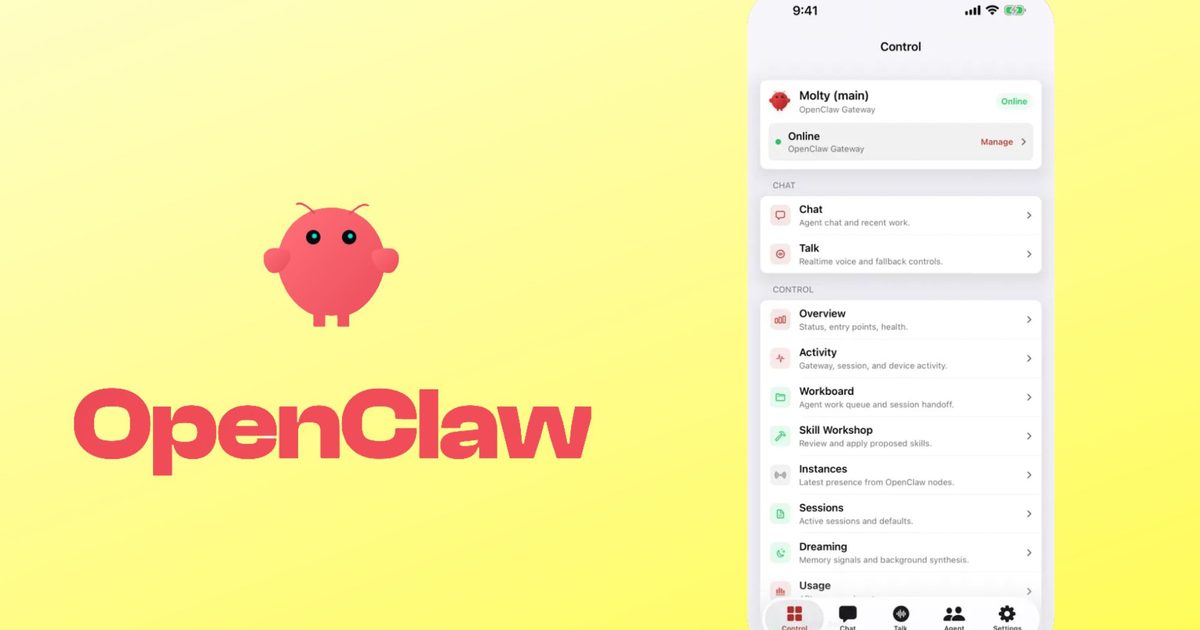
OpenClaw, the open-source AI agent that runs entirely on your own computer, just landed native apps for Android and iOS. The app does not run the AI itself. Instead, it connects to a private gateway you set up yourself on a Mac, PC, or Linux machine, turning your phone into a secure remote for everything that gateway can do.
With the mobile apps, OpenClaw becomes dramatically more accessible. You no longer need to sit at your desktop to interact with your AI agent; you can take it with you wherever you go. The apps are designed to extend the agent's reach without compromising the privacy and control that make OpenClaw unique. This is a significant step forward for open-source AI, as it brings enterprise-grade AI agent capabilities to a consumer-friendly mobile interface.
How OpenClaw works on your phone
You can pair your phone to the gateway using a QR code or setup code, a process that takes just a few minutes. Once connected, you can chat with OpenClaw directly or switch to Talk mode for real-time voice conversations. Every action the agent wants to take on your gateway requires your approval first. This approval-based model is a crucial safety feature, ensuring that no automated decisions happen without your explicit consent. It is especially important for tasks that involve accessing files, sending emails, or interacting with other online services.
You can also share text, links, and media straight from your phone into OpenClaw, and selectively enable device features such as your camera, screen, location, photos, contacts, calendar, and reminders. Push notifications keep you updated on workflow status even when the app sits in the background. For example, you could have your AI agent monitor a batch of data processing tasks and alert you when it finishes, or you could ask it to summarize a long article you just received via a link. The granularity of feature permissions means you can choose exactly what the agent can access, from your GPS location to your camera roll, and revoke those permissions at any time.
What makes OpenClaw stand out is that it is open source, which means you can inspect how it works or even customize parts of it yourself. That makes it very different from closed AI apps like ChatGPT or Gemini, where most of the backend remains hidden. For developers and privacy enthusiasts, this transparency is invaluable. You can audit the code for security vulnerabilities, contribute your own improvements, or modify the agent's behavior to suit specific needs. This level of control is almost unheard of in consumer AI products, and it positions OpenClaw as a powerful tool for anyone who wants to build a personal AI ecosystem without vendor lock-in.
How iOS and Android versions of OpenClaw stack up against each other
The iOS version needs iOS 18 or later and is completely free, whereas the Android version requires Android 12 or higher. Early reviews suggest the two apps aren't quite polished at the same level. The Android app's interface has been described as rough around the edges, whereas the iOS app looks noticeably more refined and lists itself as a Productivity app that collects no user data according to its App Store listing. This disparity likely reflects the different development timelines and the fact that iOS has a more uniform hardware and software environment, making it easier to produce a polished UI. Android's fragmentation across devices and OS versions often forces developers to make compromises.
Despite the interface differences, both versions share the core functionality: they are remote controls for your OpenClaw gateway. The choice of platform may depend more on your existing device ecosystem and your tolerance for a slightly less polished experience. On iOS, you get a streamlined, data-privacy-respecting experience out of the box. On Android, you gain the ability to customize even further, especially if you are comfortable with sideloading alternative versions of the app from the open-source community. Additionally, Android's deeper integration with system services means that features like screen sharing or location access might work more seamlessly on certain devices, though this varies widely.
OpenClaw's growing popularity hasn't gone unnoticed in the industry, and Google is reportedly building its own 24/7 personal agent to compete with it directly. This development underscores a broader trend: the race to put AI agents in users' pockets is accelerating. While proprietary solutions like Google's agent will likely offer a more integrated experience with their respective ecosystems, OpenClaw's open-source nature provides a unique advantage. Users can be confident that their data remains under their control, running on hardware they own, without a corporation monitoring their interactions. For privacy-conscious users and developers, that trade-off is often worth the extra setup effort.
The launch of mobile apps also opens up new use cases for OpenClaw. Imagine using your phone's camera to give your agent visual context about your surroundings—for example, asking it to identify an object or translate a sign. Or you could use location-based triggers to have the agent remind you of tasks when you enter a specific area. The ability to grant and revoke permissions on the fly makes these features both powerful and safe. As the open-source community continues to refine the apps, we can expect rapid improvements in interface polish and feature set, especially on Android where the initial release is already generating feedback and pull requests.
Looking at the broader landscape, OpenClaw represents a philosophical shift in how we interact with AI. Instead of a monolithic, cloud-dependent assistant, it offers a modular, self-hosted alternative that puts the user in full control. The mobile apps are a natural evolution of that philosophy, extending the agent's reach without sacrificing its core principles. For anyone serious about maintaining privacy while leveraging the power of modern AI, OpenClaw on mobile is a compelling option worth exploring.
Source:Digital Trends News