

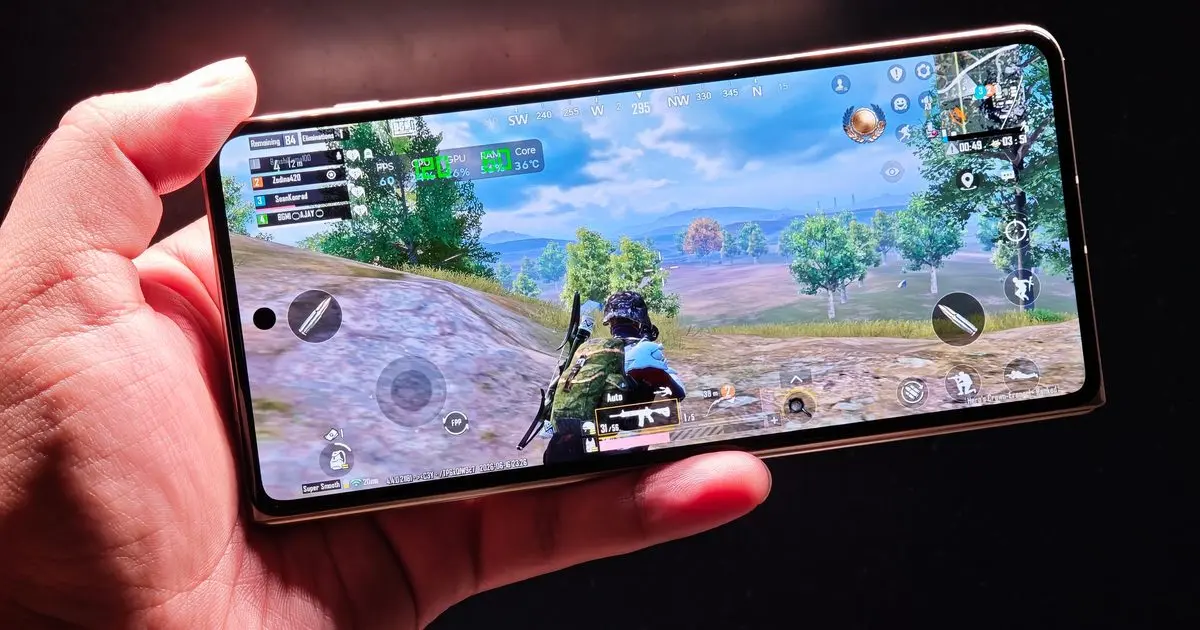
If your app store feels packed with new games lately, artificial intelligence is the reason behind it. Research company ATTN Economy found that 181,000 mobile games launched in the six months leading up to May 2026, representing a 118% increase on iOS and a 73% increase on Android compared to the same period last year. This unprecedented surge is largely attributed to a growing trend known as "vibe coding," where individuals with little to no programming experience use AI tools to build and ship games without writing traditional code.
The Rise of Vibe Coding
Vibe coding is the practice of describing a game idea in natural language to an AI assistant—such as ChatGPT, Claude, or GitHub Copilot—and having the AI generate the code automatically. The developer then refines the output through conversation, tweaking aesthetics, mechanics, or logic with simple prompts. This approach lowers the barrier to entry dramatically: anyone with an idea and a subscription to an AI coding service can now produce a playable game in hours or days instead of weeks or months.
The phenomenon has exploded across social media platforms, with creators showcasing games built entirely via AI conversation. Examples include simple puzzle games, platformers, and even arcade-style shooters that look and feel like products from small indie studios. The tools are powerful enough to handle complex tasks like collision detection, sprite animation, and basic physics, allowing non-coders to realize concepts that would have required a team of developers just a few years ago.
The Numbers Behind the Surge
The ATTN Economy data underscores just how quickly the landscape is shifting. In the six-month window ending May 2026, 181,000 new mobile games were released globally. For context, that is more than the total number of games launched on the App Store in the entire year of 2024. The iOS App Store saw the bigger jump, with 118% more new titles, while Google Play experienced a 73% surge. This flood of content is a direct result of AI-powered development tools making game creation accessible to a broader audience than ever before.
But quantity does not equal quality. While the sheer number of games is impressive, the vast majority of these titles are simple, derivative, and often suffer from generic mechanics and unpolished visuals. Many are basic clones of popular genres like match-3 puzzles, endless runners, and hyper-casual tap games. AI can generate functional code, but it struggles to produce the nuanced design, artistic vision, and engaging gameplay loops that make a game memorable.
Why Indie Developers Are Still Struggling
Even with AI reducing development time and cost, the rewards of the gaming industry are still concentrated among a tiny elite. A former executive at French mobile gaming studio Voodoo told the Financial Times that AI shaved game development time from around 14 days to 10 days. While that is a useful productivity gain of nearly 30%, it is hardly the revolution many expected. The same executive noted that the quality of AI-generated code often requires significant human editing to fix logic errors, optimize performance, and add polish.
Meanwhile, the top 1% of game publishers controlled a staggering $75.6 billion in revenue in 2025, while the remaining 99% of developers shared just $6.1 billion between them. That top tier also accounted for nearly 80% of all worldwide downloads. Vibe coding may have made game development easier for newcomers, but big gaming companies still have too much money, talent, and decades of player data for them to be easily displaced. These giants can afford to hire entire teams of AI specialists, train custom models on proprietary datasets, and run massive user acquisition campaigns that dwarf the marketing budgets of independent creators.
Furthermore, the algorithms that drive app store visibility and recommendations still favor established publishers with high-quality assets, strong review scores, and proven track records. A decent game built by a solo vibe coder will likely be buried under thousands of competitors unless it gets a lucky viral boost. The reality is that the app economy is as winner-take-all as ever, and AI has not changed that fundamental dynamic.
The Cost of Faster Production
More games and faster production have come at a high cost. According to a report from the GDC Festival of Gaming, one in four gaming employees has been laid off in the past two years. The industry shed thousands of jobs across both AAA studios and indie teams, as companies restructured to focus on AI-driven workflows and cost cutting. The same GDC survey revealed that sentiment inside the industry has shifted sharply: 52% of gaming professionals now view generative AI as harmful to the industry, up from just 18% in 2024.
This erosion of trust stems from multiple factors. Developers worry that AI will be used to replace creative roles, devalue artistic contributions, and flood the market with low-quality knockoffs that hurt the reputation of the medium. There is also concern about intellectual property issues, as many AI models are trained on copyrighted code and art without attribution. Legal gray areas around ownership of AI-generated content create uncertainty for developers who want to protect their work.
Beyond layoffs and trust issues, the quality of life for many developers has deteriorated. The pressure to produce games at an ever-faster pace using AI tools can lead to burnout and a loss of creative satisfaction. The craft of game development—writing elegant code, designing intricate levels, and hand-tuning gameplay—is being replaced by a more automated, less fulfilling process. Many veterans worry that the human touch, the instinct that makes a game feel special, is being lost in the rush to produce more content.
Yet there is a silver lining: some indie developers are using AI not to replace their skills, but to augment them. By delegating repetitive tasks like asset generation, testing, and UI layout to AI, experienced developers can focus on higher-level design and storytelling. This hybrid approach may lead to better games in the long run, but it requires a level of expertise that most vibe coders lack. Without a deep understanding of game design principles, AI-generated games tend to be shallow and derivative.
The gaming boom is real—the numbers prove it. But the tension beneath the surface is equally real. AI is making more games, but it cannot yet recreate the human creativity, intuition, and emotional intelligence that separate a forgettable product from a timeless experience. For consumers, that means more choices, but not always better quality. As the industry navigates this transformation, the challenge will be to harness the power of AI without sacrificing the artistry that makes games a uniquely compelling form of entertainment.
Source:Digital Trends News