

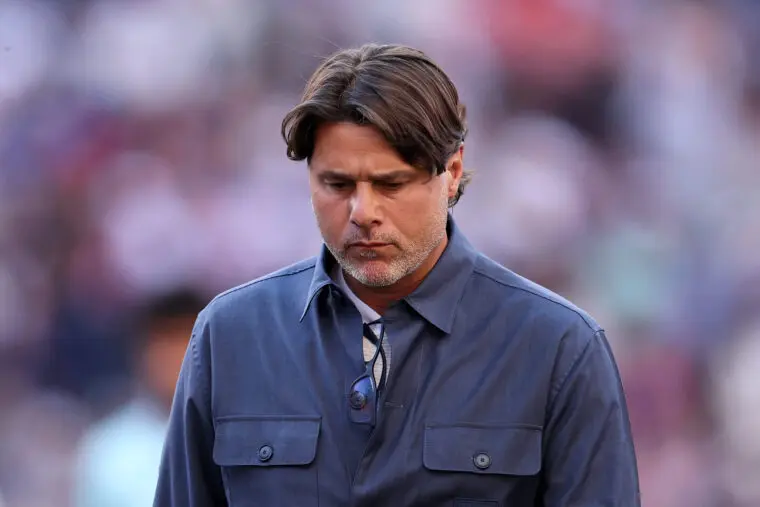
Mauricio Pochettino is set to announce his decision on whether to continue as head coach of the United States men's national team next week, following the team's humiliating 4-1 defeat to Belgium in the last 16 of the 2026 FIFA World Cup. The tournament hosts, who had entered the competition with high expectations and a strong group-stage performance, saw their campaign unravel in a disastrous knockout match that has left the entire soccer program at a crossroads.
Pochettino, who took over the USMNT two years ago with a stellar resume that includes managing Tottenham Hotspur, Paris Saint-Germain, and Chelsea, has been under intense scrutiny since the loss. Despite the early exit, US Soccer officials remain confident in his leadership and have reportedly offered him a new four-year contract worth around $6 million per year, which would keep him in charge through the 2030 World Cup. His current deal expires at the end of this month.
Background and Context
The United States hosted the 2026 World Cup, sharing duties with Canada and Mexico, and the team was expected to at least reach the quarterfinals. Instead, they were outclassed by a dominant Belgian side that exploited defensive gaps and neutralized the American attack. The defeat was particularly stinging because it came after a controversial decision to suspend star striker Folarin Balogun's one-match ban, raising questions about the federation's handling of disciplinary matters.
Pochettino inherited a young, talented squad led by Christian Pulisic, Weston McKennie, and Tyler Adams. His tactical acumen and man-management skills were seen as key to unlocking the team's potential. During his tenure, the USMNT posted impressive friendly wins against top European sides and looked cohesive during World Cup qualifying. However, the knockout stage once again proved to be a barrier, as the team failed to advance past the round of 16 for the third consecutive World Cup.
Pochettino's Career Highlights and Challenges
Argentine-born Pochettino built his reputation as a demanding, detail-oriented coach who excels at developing young players. At Tottenham, he guided the club to the 2019 Champions League final and consistently challenged for Premier League honors. His stints at PSG and Chelsea were more turbulent, marked by high expectations and internal conflicts, but he maintained a track record of improving individual performers.
With the USMNT, Pochettino implemented a high-pressing system that required intense physical conditioning. The team embraced his methods during the group stage, where they defeated Senegal, drew with the Netherlands, and beat New Zealand to top their group. But the Belgium match exposed chronic weaknesses: defensive disorganization, lack of concentration on set pieces, and an inability to cope with elite counter-attacks.
Reactions and Debate
The aftermath has sparked a fierce debate about the direction of the program. Former US international Alexi Lalas, now outspoken as a commentator, argued that the cycle has run its course. "It was an abject failure," Lalas said. "It's one thing to go out to Belgium – it's another thing to go out in the way they went out, especially with the way that they looked through the tournament. I don't think the confidence and excitement was misplaced for this team, but they picked the worst possible day to play their worst possible game."
Other former players, such as Marcelo Balboa, have urged patience. Balboa pointed out that Pochettino inherited a fixture schedule that included limited preparation time and that the team's overall trajectory remains positive. "We can't judge a two-year tenure on one game," Balboa said. "Look at the progress in possession, pressing, and player development. The foundation is there."
Meanwhile, speculation about potential replacements has already begun. LAFC head coach Steve Cherundolo, who has won MLS honors and previously served as an assistant with the USMNT, has been mentioned as a domestic candidate. International options include former Barcelona manager Xavi Hernandez and ex-Real Madrid boss Zinedine Zidane, though both are currently linked with other roles.
Pochettino himself has remained measured. After the defeat, he said he needed time to reflect before making a decision. "These tournaments are emotional. When you lose, you think about everything. But I also see the potential in this group. The federation has been supportive. We have talks scheduled, and I will decide from there."
Contract Details and US Soccer's Stance
US Soccer's offer is a significant commitment. The federation, under pressure to capitalize on the World Cup momentum, sees Pochettino as the right person to lead a new generation. The proposed contract would run through 2030, covering the next World Cup cycle and ensuring stability. However, the $6 million annual salary is a fraction of what top European coaches earn, and Pochettino might have other opportunities if he declines.
The decision also carries broader implications. If Pochettino stays, he will need to rebuild trust with fans and critics while addressing systemic issues in U.S. soccer development. The defeat exposed gaps in the domestic player pipeline, particularly in central defense and attacking depth beyond Balogun and Pulisic. If he leaves, US Soccer would conduct a high-profile search with the aim of finding a candidate who can deliver immediate results and long-term growth.
Broader World Cup Landscape
The USMNT's exit was not the only story of the tournament. Spain defeated Argentina 1-0 in a tense final, with Lionel Scaloni's emotional post-match press conference hinting at his possible resignation. England also saw success under Thomas Tuchel, who confirmed he would stay on for Euro 2028. These developments underscore the volatility of international coaching, where success and failure hinge on single games.
For the United States, the focus now shifts to the 2030 World Cup, which will be hosted by a coalition of South American nations. The USMNT has a young core entering its prime, but questions linger about tactical consistency, mental toughness, and the ability to compete against elite European and South American sides. Pochettino, if he stays, would be tasked with answering those questions.
Pochettino's legacy with the USMNT will ultimately be defined by his decision. His reputation as a transformative figure was forged at club level, but international management places unique demands—less training time, fewer games, and immense pressure from media and sponsors. The next week will not only determine his future but also set the tone for American soccer's next chapter.
As fans wait for the announcement, the debate continues. Some point to the group stage performances as signs of progress, while others highlight the knockout failure as proof of stagnation. The truth, as always, lies somewhere in between. But for now, all eyes are on Pochettino as he weighs his options, knowing that whatever he chooses will have ripple effects across the sport in the United States.
Source:Yahoo Sports News