

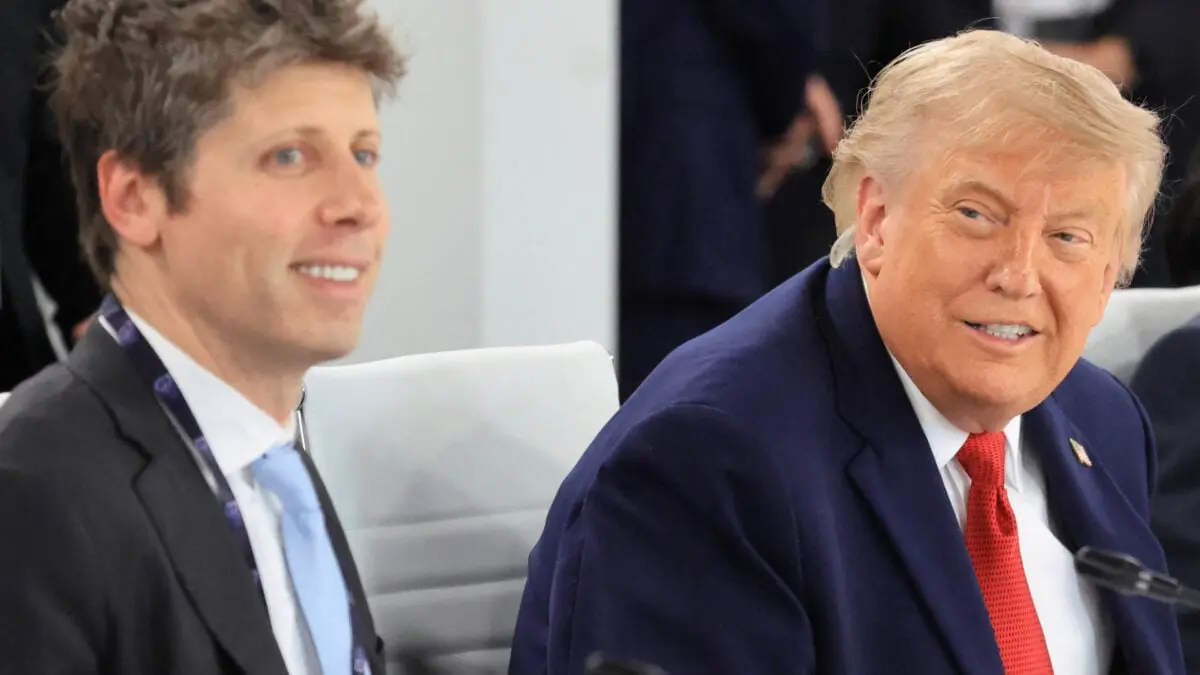
Economic chiefs from some of the world's largest economies are gathering in North Carolina this week for meetings ahead of the U.S.-hosted G20 summit in December. The main event, the Innovation Ministerial, is taking place in Raleigh-Durham with trade and commerce ministers, while finance ministers and central bank governors are meeting separately in Asheville. At the center of the discussions is artificial intelligence, and the Trump administration has made its position clear: governments should get out of the way. Rather than negotiating stricter AI oversight, U.S. officials are urging their counterparts to adopt a hands-off approach and sign on to a document known as the Carolina Principles.
The push, reported by White House officials on Tuesday, makes AI deregulation the centerpiece of the U.S. agenda at the North Carolina meetings. Commerce Secretary Howard Lutnick is co-hosting the gathering with Michael Kratsios, President Trump's technology adviser. Kratsios, a key architect of the country's AI policy, is leading the effort to convince the world's largest economies not to impose new regulations on AI development. The proposed Carolina Principles, named after the state hosting the meetings, would commit signatory countries to invest in foundational research, accelerate discovery, strengthen commercial AI opportunities, and reserve new regulation only for novel considerations arising from AI's use. In plainer terms, the administration wants G20 governments to remove any barriers that stand in the way of companies expected to make billions of dollars from AI advancements.
What the Carolina Principles would do
According to prepared remarks from the ministerial, Kratsios is expected to say that policymakers do not need to approach each innovation in isolation and should not treat every emerging technology as a first-of-a-kind policy problem. The guiding philosophy is that existing laws and regulations are sufficient to handle most challenges caused by AI, and that creating new, AI-specific rules would slow innovation and hand an advantage to China in the global race for technological supremacy.
The administration's focus on deregulation is not new. Since taking office, Trump and his team have championed a light-touch approach to AI, arguing that too much red tape would hamper the ability of the United States to stay ahead of Beijing in critical technologies. The Carolina Principles are intended to export that approach to other countries, creating an international agreement among G20 members to reduce barriers to AI development and commercial deployment.
But the proposal has prompted swift criticism from civil society groups and policy analysts who argue that a hands-off framework ignores the steep social, economic, environmental, and health risks that come with rapidly deployed AI systems. They point to concerns about algorithmic bias, job displacement, energy consumption of large data centers, misinformation, and national security vulnerabilities. Under the U.S. proposal, they say, AI companies will be free to profit while the public bears the associated risks as collateral damage.
Opposing views from Canada and global institutions
American officials are not the only ones arriving with an agenda. Canadian officials have told the ministerial that their delegation will advocate for a balance between innovation and public trust and safety. That puts Canada more in line with other international voices that have called for coordinated regulation rather than deregulation. The tension reflects a broader global split: some countries, especially in the European Union, have chosen to implement comprehensive AI laws, while the United States has resisted broad regulatory frameworks in favor of voluntary guidelines and executive orders.
A number of global institutions are also watching the talks warily. United Nations Secretary-General António Guterres has repeatedly warned that AI is developing faster than the rules meant to govern it, compounding risks to economies, elections, and security. At an AI dialogue in July, Guterres said a technology that can reshape economies, transform the world of work, sway elections, and tilt the balance of security is being deployed faster than anyone, including the people building it, can keep up. He added that innovation needs guardrails.
Financial regulators are echoing those concerns. Ahead of the finance ministerial in Asheville, Andrew Bailey, the Bank of England governor and chair of the G20's Financial Stability Board, sent attendees a letter warning that developments in what he called frontier AI pose unique financial and cyber risks that can easily spread across borders. That letter underscored how AI is not just a tech policy matter but also a serious issue for global financial stability.
A gathering of AI's most powerful players
The Innovation Ministerial is also notable for the high-profile roster of technology executives scheduled to address attendees, according to published reports. Commerce Secretary Lutnick will host fireside chats with OpenAI CEO Sam Altman and Nvidia CEO Jensen Huang over the two-day meeting. Altman is expected to preview new advances in AI and discuss their economic implications, while Huang's company has become central to the AI boom thanks to the GPUs powering large language models. Mark Zuckerberg, the CEO of Meta, is also in the lineup.
Source:Gizmodo News