

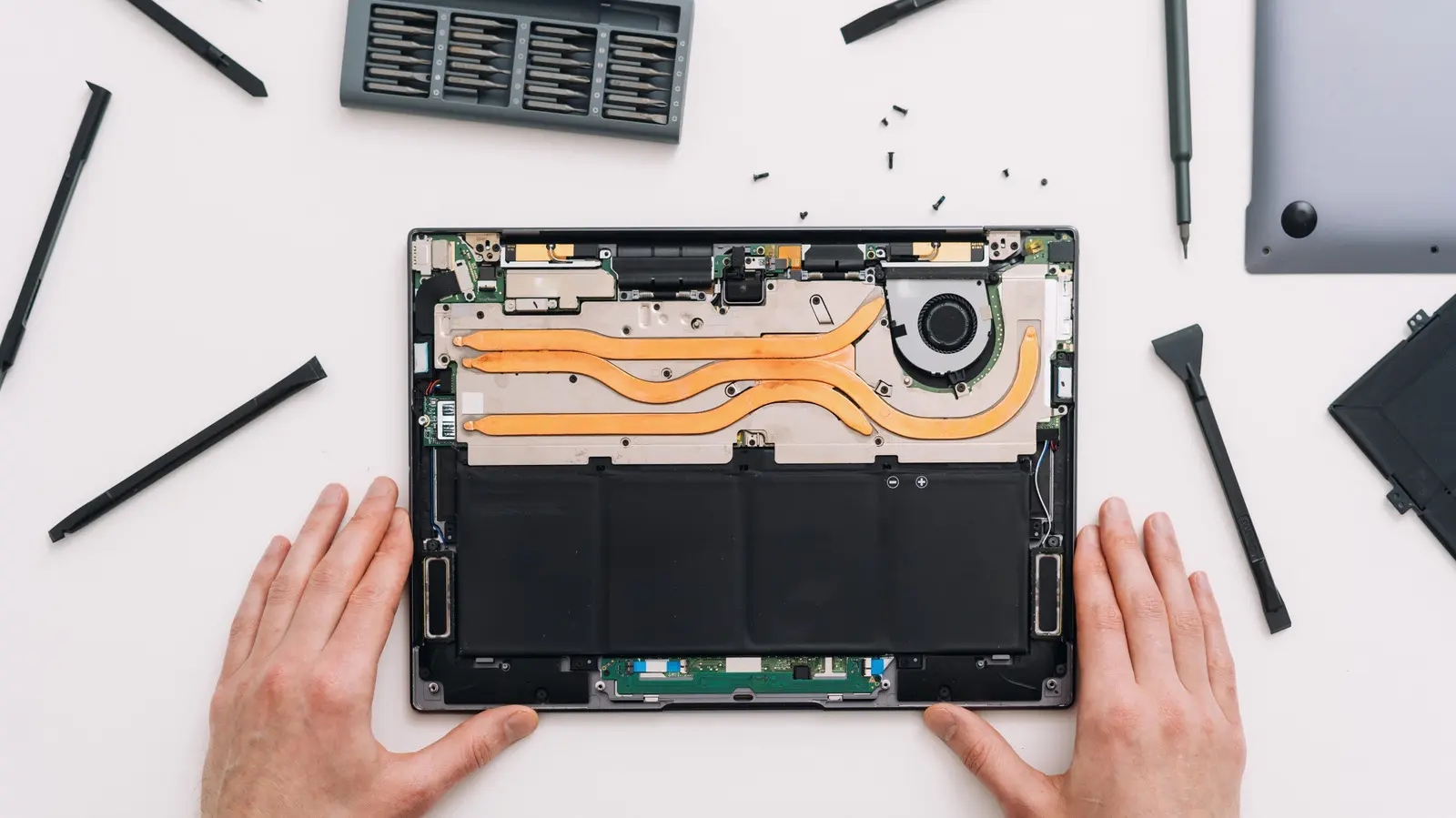
Removable batteries were once a standard feature across consumer electronics. In the 1990s and 2000s, most phones, laptops, handheld game consoles, and even some cameras let users pop out the battery and slide in a fresh one. Today, that convenience has all but disappeared from mainstream devices. Fixed battery designs now dominate the smartphone, laptop, tablet, and controller markets. A few exceptions remain, such as the Fairphone 6 and HMD Skyline in the smartphone market, but they are outliers. The shift was not accidental. Behind the move away from removable batteries are a set of engineering, design, and business decisions that changed the rules of product development.
Key facts
- Tech companies stopped using removable batteries to make devices thinner, more durable, and to free up space for other components.
- Apple argued that a fixed battery allowed it to increase capacity without making the laptop bigger or heavier.
- Fixed batteries can be shaped to fit unused spaces, helping manufacturers pack more power into compact devices.
- Removable batteries were common in the 1990s and 2000s because charging was slow and older battery chemistries suffered from the memory effect.
- The European Union has passed rules requiring user-replaceable batteries in many portable devices, potentially bringing swappable batteries back.
The design logic behind fixed batteries
When Apple released a 17-inch MacBook Pro with a fixed battery in 2009, critics were quick to complain. Users had grown accustomed to carrying spare batteries for long flights, business trips, and school days. Apple, however, stood by the decision and offered a detailed explanation. The company said a removable battery needs extra layers of protection against damage. The laptop itself also has to provide a compartment for the cell, and both of those factors occupy extra space inside the device. By using a fixed battery, the laptop automatically reclaimed that space and could use it to increase the cell's capacity without increasing the size or weight of the machine.
Fixed batteries also allow manufacturers to think differently about shape. A removable battery generally has to be a standard rectangular block so that it can slide into a compartment and make contact with a universal connector. A fixed battery can be designed to fit whatever space is available inside a device. It can wrap around other components, sit in an L-shaped curve, or take on an unusual thickness in one corner and a thinner profile in another. This freedom makes it easier to maximize the volume dedicated to energy storage. In a slim smartphone, every millimeter of space matters, so the ability to mold the battery around the internal architecture is a significant advantage.
Another factor is durability. With a removable battery cover, there is almost always a seam between the back panel and the frame. That seam can allow dust and moisture to enter the device. Fixed battery designs, especially those with sealed rear glass or unibody metal construction, can be made more resistant to the elements. While removable battery devices can be built to resist water, the engineering effort is greater. For companies competing on premium design and IP ratings, the sealed approach is often easier.
There is also a business dimension. Devices with fixed batteries are harder for users to repair themselves. Over time, a battery that loses capacity may encourage a user to purchase a new device rather than pay for a replacement. Consumer rights groups and environmental advocates have criticized this practice, arguing that it reduces the lifespan of electronics and increases electronic waste. Still, from a product design perspective, fixed batteries offer enough advantages that most major manufacturers embraced them.
Why removable batteries were common in the 90s and 00s
Non-removable batteries may be the norm today, but it was not always that way. In the 1990s, the 2000s, and even into the early 2010s, removable batteries were standard in many gadgets. Phones from Nokia, Samsung, Motorola, and LG almost always had back covers that snapped off to reveal a user-replaceable cell. Laptops often had battery packs that clicked out with the push of a latch. Handheld consoles like the Nintendo 3DS, Nintendo 3DS XL, and Nintendo 2DS also featured swappable batteries.
Swappable batteries were common back then because they were convenient for the user. During that era, charging speeds were nowhere near as fast as they are today. It could take hours to fully recharge a phone or laptop. Instead of waiting for the device to recharge, a user could simply carry a spare charged battery and swap it in when the device ran out of charge. For mobile professionals and frequent travelers, this was a practical feature, not a luxury.
Another factor that made removable batteries standard was battery chemistry. Early consumer gadgets often used nickel-metal hydride or nickel-cadmium batteries. These chemistries had drawbacks like the memory effect, where a battery would gradually lose its maximum energy capacity if it was repeatedly recharged before being fully discharged. Having a removable battery let users calibrate the battery or replace it easily when its performance declined. Modern lithium-ion batteries do not suffer from the same memory effect, and they also have a lower self-discharge rate, meaning they can hold their charge when sitting unused.
How battery technology changes removed the everyday need for swapping
The move away from removable batteries did not happen only because of design preferences. It also became possible because battery technology improved. Lithium-ion batteries took over the market and offered higher energy density, more stable discharge curves, and longer lifespans than older chemistries. Over time, manufacturers learned how to squeeze more capacity into thinner and smaller packages. This meant that a sealed battery could often deliver enough power to last through a full day, reducing the user's need to swap in a spare.
There have also been exciting advancements in battery technology, such as silicon-carbon batteries. These newer cells have a high energy density, which enables manufacturers to pack high capacities into slim devices without increasing their footprint. Fast charging has also changed the equation. A device that is running low on power can be plugged in for a few minutes and gain several hours of use. For example, some smartphones now support charging speeds of 80W, 120W, or even higher, drastically cutting the time users need to stay tethered to a wall outlet.
Accessories have also filled the gap. If a user runs out of juice because of battery-draining apps, a battery case or a power bank can provide a quick recharge. These accessories are not as elegant as a removable battery, but they work well enough for most people. As a result, the inconvenience of a sealed battery has become less noticeable over time. Many consumers have simply accepted that a phone or laptop is a sealed product, just like a tablet or a pair of earbuds.
Removable batteries could be making a comeback
Although many tech companies have ditched swappable batteries in their products, a new development could mark their resurgence, especially in the European Union. As part of two new rules passed by the EU, portable gadgets with a few planned exemptions like smartwatches and fitness trackers will need to have user-removable batteries. These rules were made in an attempt to improve the longevity of devices and reduce electronic waste. The regulations are expected to push manufacturers to rethink their battery designs, and they could have a broad impact beyond Europe because many companies build one version of a product for global markets.
There is, however, a catch. Phones with an IP67 rating that can hold 83% and 80% of battery capacity after 500 and 1,000 charge cycles, respectively, are exempt from the requirement. That means a device can keep a sealed battery if it proves that the battery is durable enough to last several years without replacement. For products that cannot meet those thresholds, the solution may be a user-removable battery.
The EU's replaceable battery laws affect more than just smartphones. They also apply to other tech product categories, such as headphones, portable game consoles, and e-readers. Since the EU's wider-reaching law on removable batteries kicks in on February 18, 2027, several companies have already begun making changes to their devices to comply. A good example is Sennheiser, which has launched its new Momentum 5 wireless headphones with a swappable battery. Nintendo will launch new Joy-Con 2 controllers with user-replaceable batteries this winter, and it also plans to launch a new version of its Pro Controller with a swappable battery to comply with the law.
The return of removable batteries may not be universal, and sealed batteries will likely remain in many premium phones because of the exemption for durable cells. However, the regulatory push from the EU could change the direction of the entire industry. Historically, EU rules have had far-reaching consequences across the tech world. For example, the adoption of USB-C as a common charging standard was driven by European regulations and then spread to many devices sold globally. The same could happen with user-replaceable batteries. If you prefer swappable batteries over fixed ones, you might be glad to hear that they may become more common in the near future.
Source:SlashGear News