

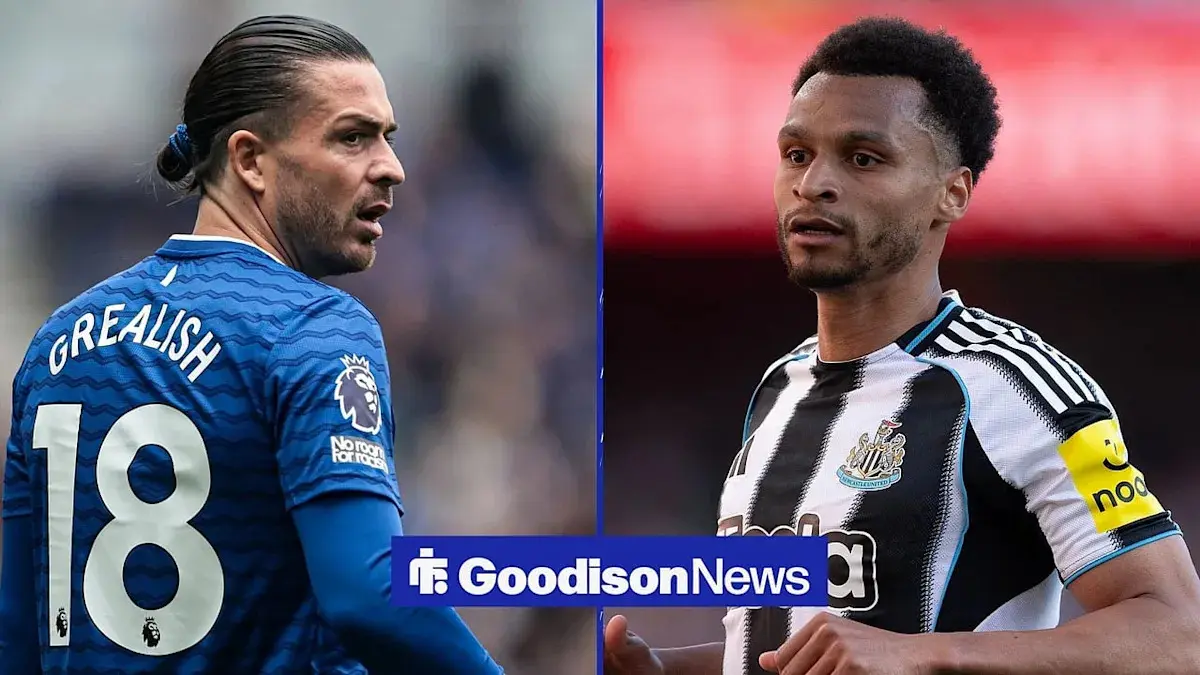
Everton are reportedly weighing moves for both Jack Grealish and Jacob Murphy this summer, and the data suggests that signing the pair could give David Moyes the perfect winger partnership. The Toffees are looking to bolster their wide options after a season that saw them struggle for consistency in attack. Grealish, who spent last season on loan at Everton, and Murphy, a Newcastle United forward, have emerged as primary targets. Rather than choosing one or the other, the club should move for both, as their complementary skill sets could unlock a new dimension in Everton's offense.
Jack Grealish's career has been a journey of highs and lows. After rising through the ranks at Aston Villa, he became the club's captain and then secured a £100 million move to Manchester City in 2021. At City, he won multiple Premier League titles and a Champions League, but his playing time diminished under Pep Guardiola. Seeking regular football, he joined Everton on loan in the summer of 2025. The loan spell started promisingly, with Grealish contributing six goals and two assists in 18 appearances before a serious injury in January cut his season short. Despite the setback, the 30-year-old showed flashes of the creativity and dribbling ability that made him one of England's most exciting talents.
On the other side, Jacob Murphy has carved out a steady career at Newcastle United. The 31-year-old winger, who joined the Magpies from Norwich City in 2017, has been a reliable option under Eddie Howe. Last season, Murphy netted 0.17 goals per 90 minutes and averaged 2.34 shots per game, underscoring his directness and goal threat. He is a high-volume crosser, completing 1.33 crosses per 90, which would give Everton a different aerial dimension. Murphy's ability to stretch defenses and deliver balls into the box contrasts sharply with Grealish's more patient, possession-based style.
Data-driven analysis of their fit
Looking at the numbers, the two wingers offer distinct profiles that could complement each other. Grealish, despite his lower goal output (0.11 per 90), creates more chances (2.10 per 90) and assists (0.33 per 90). He is a progressive carrier who draws fouls and relieves pressure. Murphy, meanwhile, is more of a direct runner and finisher. While Grealish recorded 0.55 crosses per game, Murphy nearly doubled that figure. In defensive contributions, Grealish also wins the duel battle (50.5% success rate) compared to Murphy (40.3%), aligning with Moyes's demand for attackers to press and track back.
This blend is reminiscent of classic wide partnerships in the Premier League: a creator who drifts inside and dictates play, paired with a speedster who hugs the touchline and delivers. At Everton, Grealish could operate from the left, cutting onto his right foot, while Murphy on the right would provide width and crossing. Moyes often prefers a 4-4-1-1 or 4-2-3-1 shape, and having both options would allow tactical flexibility. If Everton face a low-block defense, Grealish's close control and short passing can unlock tight spaces; if they need to counter-attack or exploit space behind the full-back, Murphy's pace and crossing become invaluable.
Why age should not be a concern
Some critics point to the ages of Grealish (30) and Murphy (31) as a deterrent for a club looking to build for the future. However, in the immediate term, both players have proven they still have plenty to offer. Grealish's injury was a setback, but his underlying statistics before that were strong. Murphy, too, has remained durable and effective. Signing experienced wingers would also allow Everton to gradually integrate younger talents like Tyrique George and Tyler Dibling, who are prospects for the future. Relying on teenagers from day one can backfire; giving them time to develop under seasoned professionals is a smarter strategy.
Moreover, the Premier League is full of wingers in their early 30s who continue to thrive: Son Heung-min, Raheem Sterling, and even Mohamed Salah at 33 remain elite. Age alone is not a determinant of performance when the player's style does not rely purely on explosive speed. Grealish has always been about guile and technique, while Murphy's game is still sharp enough to beat Premier League full-backs. If they stay healthy, they could be effective for two or three more seasons.
Defensive contributions and Moyes's system
David Moyes has always demanded defensive responsibility from his wide players. At Everton, during his first stint, wingers like Steven Pienaar and Leon Osman were known for tracking back. Grealish, during his loan, showed a 50.5% duel win rate and 7.56 defensive contributions per game, which includes tackles, interceptions, and clearances. Murphy, with a 40.3% duel win rate and 5.01 defensive contributions, is less dominant but still works hard. However, when paired together, the team can adjust: Grealish can shield the left-back while Murphy provides an outlet for counter-attacks. The blend of defensive solidity and attacking threat fits Moyes's blueprint perfectly.
Additionally, both players have experience in high-pressure environments. Grealish has played in Champions League finals and title run-ins at Manchester City. Murphy has been part of Newcastle's resurgence under Eddie Howe, which included a Carabao Cup final appearance. This big-game experience could rub off on Everton's younger players and help the squad handle critical moments in matches.
The potential impact on Everton's attack
Everton's attack last season lacked variety. They had Iliman Ndiaye operating as a false nine or winger, but the team often became predictable. Adding Grealish would give them a player who can retain possession under pressure and create set-piece opportunities by winning fouls. Murphy would add a direct threat, especially in transition. Imagine a scenario where Everton win the ball back in midfield: a quick pass to Murphy, who drives at the full-back and delivers an early cross for a striker like Dominic Calvert-Lewin. Conversely, in settled possession, Grealish can draw defenders out of shape and slide passes through for overlapping full-backs or midfield runners.
The partnership could also mesh well with other potential signings or existing players. If Everton manage to keep hold of Ndiaye, he can operate in a central role, while Grealish and Murphy provide width. The combination of creativity, crossing, and defensive work rates makes this trio formidable. Moreover, the emergence of young talents like Tyrique George—who has impressed in youth ranks—would not be rushed, as the senior duo can carry the load while the youngster develops gradually.
From a financial standpoint, both players might be available at reasonable prices. Grealish's loan suggests Manchester City are open to a permanent move, and Murphy's contract at Newcastle may enter its final year, making him a cheap option. Spending on two proven Premier League wingers rather than one marquee signing could spread the risk and increase the overall squad depth. With Everton's need to climb the table and avoid relegation scares, reliable performers are essential.
In recent seasons, Everton have struggled to create enough chances from wide areas. The statistics from last year show that the Toffees ranked in the bottom half for crosses completed and chances created from the flanks. Grealish and Murphy directly address those weaknesses. Grealish's 2.10 chances created per 90 would have been the highest among Everton's wide players, while Murphy's crossing volume would have doubled the output of any current winger. This statistical improvement alone could elevate the team's goal tally by 10-15 goals over a season.
Additionally, both players are proven set-piece contributors. Grealish is adept at winning free kicks in dangerous areas, and Murphy's delivery from corners and free kicks is above average. Moyes's Everton have historically been strong from set pieces, and adding two more specialists could make them even more lethal. The combination of Grealish's trickery to win fouls and Murphy's whipped crosses could become a key tactical weapon.
The only potential obstacle is fitting both into a starting lineup without sacrificing balance. However, Moyes has shown tactical flexibility, even using a 4-3-3 or 3-4-3 in certain games. Grealish could start on the left, Murphy on the right, with a central midfielder like Abdoulaye Doucouré or new signing providing support. If one player is injured or needs rest, the other can take on a more prominent role. Having two quality wingers also allows for in-game tactical changes; if Everton are trailing, they can push both forward and overload the flanks.
Ultimately, the decision comes down to ambition. Everton cannot afford to be passive in the transfer market. Signing both Grealish and Murphy would send a statement that the club intends to compete for European places. The duo are not headline-grabbing superstars, but their middle-class efficiency could be the foundation of a solid campaign. The data strongly suggests they are not redundant; they are complementary. And in a league where small margins decide matches, having two wingers who can do different things is a luxury that Everton should seize.
Source:Yahoo Sports News