

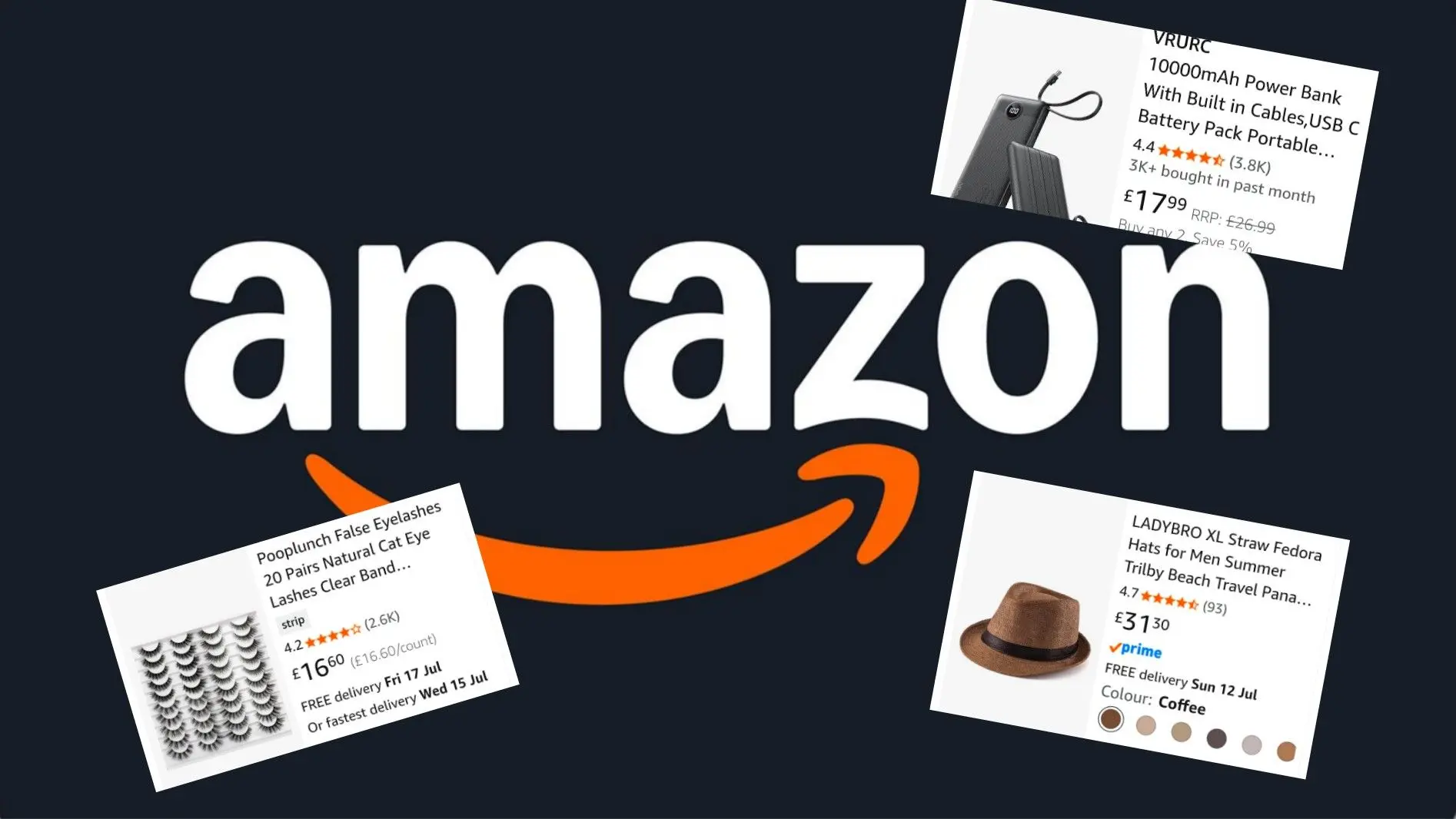
Amazon has long been the go-to marketplace for nearly everything, from household essentials to niche electronics. But in recent years, a new problem has emerged: the platform is increasingly flooded with low-quality, AI-generated content. Industry insiders and frustrated shoppers have dubbed this phenomenon 'slop'—a term originally popularized in the context of AI-generated art and text, now applied to the flood of generic product listings, automated reviews, and spammy sellers that dominate search results.
The issue is not subtle. A simple search for popular categories like 'wireless earbuds' or 'kitchen knives' can return pages of listings with near-identical titles, nonsensical descriptions, and suspiciously perfect ratings. Many of these products are listed by third-party sellers using AI tools to generate content at scale—often without even holding inventory. The result is a marketplace where genuine quality products are buried under an avalanche of synthetic content.
What Is 'Slop' on Amazon?
The term 'slop' was first used in AI communities to describe low-quality, mass-produced AI-generated images and text. It has since been adopted by critics of Amazon's marketplace to refer to the growing volume of listings that appear to be created by automated systems rather than humans. Typical signs include:
- Product titles that are keyword-stuffed and grammatically awkward.
- Descriptions that read like they were written by a bot, often repeating the same phrases.
- Brand names that are random combinations of letters.
- Reviews that are clearly fake or generated.
- Stock photos that look like they were pulled from a generic image bank.
Amazon's own algorithms sometimes exacerbate the problem. The platform rewards listings that have high keyword density and frequent updates, which encourages sellers to use AI tools to churn out content. These listings often rank high in search results, pushing down products from legitimate sellers who spend time on quality descriptions and images.
The Rise of AI-Generated Listings
The explosion of generative AI tools like ChatGPT and image generators has made it easier than ever for sellers to create product listings in bulk. A seller can now input a few keywords and have an AI produce hundreds of product titles, descriptions, and even images in minutes. While this might seem efficient, it has led to a race to the bottom in terms of quality.
According to recent reports, Amazon has taken some steps to curb the problem, such as using machine learning to detect fake reviews and low-quality content. However, the scale of the issue is immense. With millions of new products added every day, manual moderation is impossible. The result is that shoppers often find themselves scrolling through pages of essentially identical listings, all claiming to be the 'best' or 'top-rated' but offering little real information.
The Extension That Cleans It Up
Enter a new browser extension designed specifically to tackle this problem. The extension, which works on Amazon's website, uses a combination of community reporting, algorithmic analysis, and user preferences to hide or flag listings that are likely to be slop. It can be installed on Chrome, Firefox, and Edge browsers, and it integrates directly into the Amazon shopping experience.
How does it work? The extension adds a small icon next to each product listing. When clicked, it provides a confidence score indicating how likely the listing is to be AI-generated or spam. Users can also add listings to a shared blocklist, which is updated regularly. Over time, the extension learns from user behavior and improves its detection. It also highlights listings from verified, established sellers, making it easier to find trusted products.
The extension does not block ads or attempt to modify Amazon's search algorithm—it simply gives the user more control over what they see. For example, a user can set a threshold so that any listing with a 'slop score' below 80% is automatically hidden. This dramatically cleans up search results, allowing quality products to surface.
Reaction from the Community
The extension has gained a small but passionate following on platforms like Reddit and Hacker News. Many users report that it has transformed their Amazon shopping experience, cutting down the time spent filtering through junk. One user noted, 'I used to spend 20 minutes scrolling through trash to find a decent pair of headphones. Now with the extension, I see only the good stuff on the first page.'
Others have raised concerns about potential false positives—legitimate small sellers who use AI tools to create listings because they cannot afford professional copywriters. The extension's developers acknowledge this and have built in a feedback mechanism so that sellers can appeal a low score. Additionally, the extension prioritizes seller reputation over content quality, so a small business with good customer service can still appear even if its descriptions are a bit clunky.
Amazon's Own Efforts and Limitations
Amazon has not officially commented on the extension, but the company has been aware of the slop problem for some time. In 2023, Amazon rolled out a new policy requiring sellers to disclose the use of AI in product images and descriptions. However, enforcement is lax, and many sellers continue to use AI without disclosure. The platform also introduced a 'Frequently Returned' badge on some products, but this only addresses quality issues after the fact.
Analysts point out that Amazon faces a fundamental conflict of interest: the marketplace model thrives on volume, and AI-generated listings increase the number of products without adding costs. Cleaning up the platform could reduce inventory and revenue from seller fees. Therefore, while Amazon takes occasional steps to improve quality, it is unlikely to do so aggressively enough to satisfy shoppers.
How to Use the Extension
Installing and configuring the extension takes just a few minutes. After adding it to your browser, navigate to Amazon.com and perform a search. You'll see small badges appear on each product card. Clicking the badge shows a breakdown of the 'slop factors'—such as suspicious seller history, keyword stuffing, and review patterns. You can also customize your settings to automatically hide listings from certain sellers or those with low scores.
The extension is free but relies on community contributions for its database. There is also a premium version that offers more advanced features, such as cross-platform scanning across multiple Amazon marketplaces (US, UK, Germany, etc.) and integration with price comparison tools.
Broader Implications for E-Commerce
The slop problem on Amazon is not unique. Other marketplaces like eBay, Walmart, and Etsy are also seeing an influx of AI-generated content. However, Amazon's sheer size makes it the epicenter. The rise of such extensions signals a growing demand for tools that help consumers navigate an increasingly synthetic digital environment. It also raises questions about the future of online shopping: if AI can generate convincing but empty product listings, how do we ensure that genuine human craftsmanship and quality are still visible?
Some experts argue that the solution lies in better AI on the platform side—algorithms that can detect and demote AI-generated slop. But until Amazon prioritizes this, third-party tools like this extension are the best defense for shoppers. As one developer of the extension put it, 'We're just giving people a way to see through the noise. Amazon could do it themselves, but they have other priorities. So we did it for them.'
For now, the extension remains a niche tool, but it represents a growing trend of user-driven quality control. As more shoppers become aware of the problem, demand for such solutions is likely to increase. And as AI-generated content becomes even more sophisticated, the arms race between content generators and content filters will only intensify.
In the meantime, Amazon shoppers who are tired of wading through slop have a new weapon in their arsenal. The extension is available now for major browsers, and its creators say they are working on versions for mobile browsers and even a standalone app. Whether it will become a standard tool for online shoppers or remain a niche curiosity will depend on how much Amazon itself decides to clean up its act.
Source:Windows Central News