

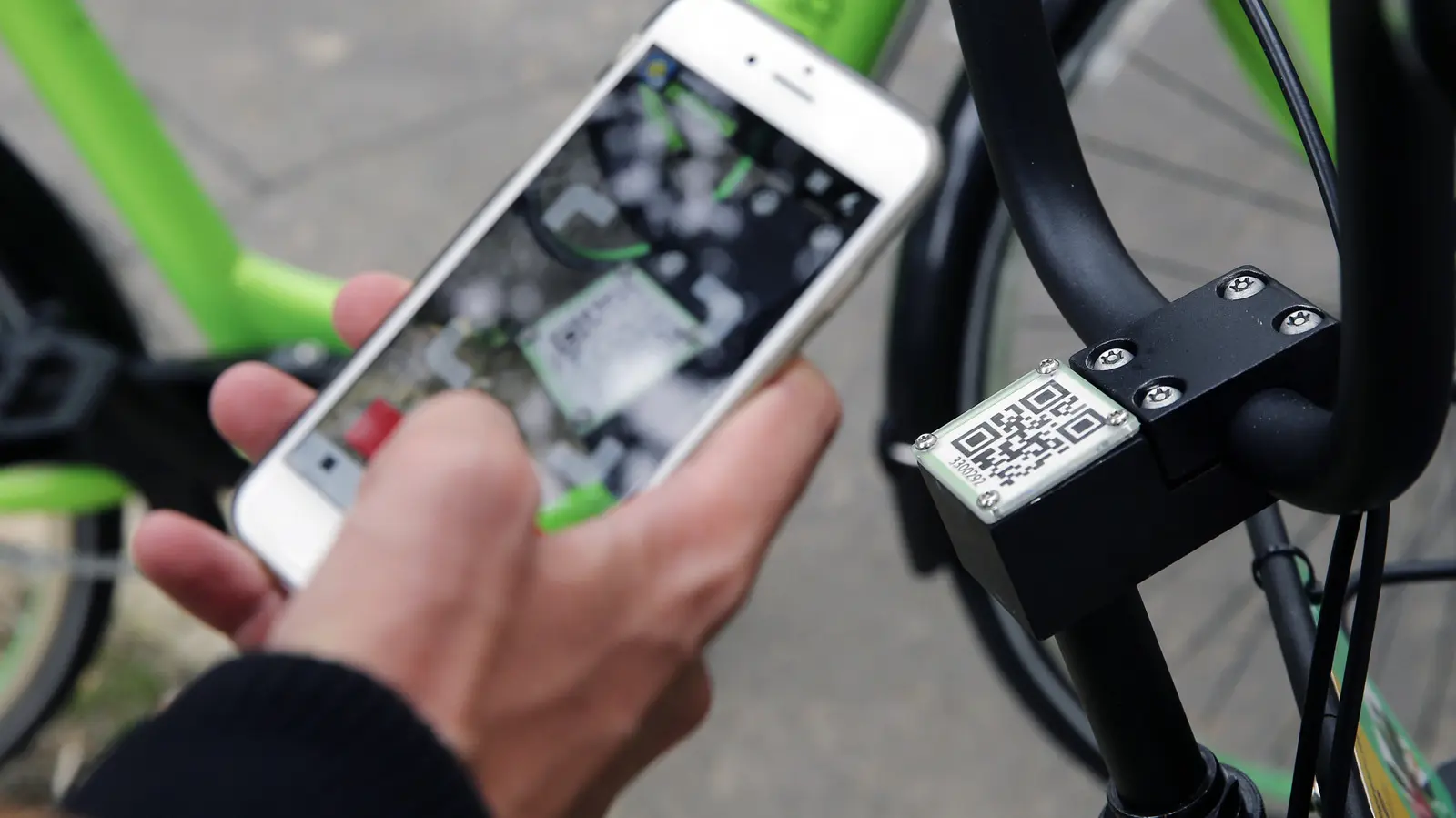
QR codes have become one of the most familiar visual tools in daily life. They are used for contactless payments, restaurant menus, event check-ins, shipping labels, museum exhibits, and countless advertising campaigns. The acronym QR stands for Quick Response, and that promise depends on a code being easy to find and quick to scan. A badly printed or undersized QR code can ruin the experience, forcing a user to zoom, adjust lighting, or move the phone around until frustration sets in. Most users will simply give up after a few attempts.
Part of the confusion around QR code sizes comes from mixing up the overall dimensions with the internal structure. A QR code is not one continuous graphic; it is a grid of black and white modules. The scanner reads the patterns of these modules to decode the data. The larger the module, the easier it is for a camera to resolve it, but the larger the final code becomes. A QR code with a 21-by-21 module grid is called Version 1, and it represents the smallest standard QR code available. Higher versions add more rows and columns, which means more capacity for data but also a larger physical footprint at the same module size.
Common recommendations versus reality
Many designers and printing guides recommend keeping QR codes at least 0.8 inches to 1 inch square, or roughly 20 to 25 millimeters. Some guidelines say 1 centimeter is the absolute minimum. These suggestions make sense for mass media campaigns, signs, and packaging, where a code needs to be visible and approachable. But they are not true technical limits. The actual minimum size is influenced by several factors: the number of modules in the code, the quality of the print, the resolution of the scanner, the amount of error correction, and the lighting conditions.
The official developer of the QR code is Denso Wave, a Japanese company. It originally introduced the QR code in 1994 to track auto parts during manufacturing. Because industrial labeling often needs to be compact and durable, Denso Wave studied how small a code could be printed while still remaining scannable. It specifies minimum module sizes rather than whole-code sizes. According to Denso Wave, a module should be no smaller than 0.17 millimeters. For a Version 1 code with 21 modules per side, this gives a theoretical minimum width of 3.57 millimeters, which is only about 0.14 inches. That is roughly the width of a grain of rice.
This official number might sound surprising because most people have only seen QR codes printed at a much larger scale. However, the design of the QR code was always meant to be compact. The early factory applications needed to place codes on small electronic parts, so compactness was essential from the start.
The world record for a tiny QR code
It is possible to go far beyond Denso Wave's practical guidance. In laboratory settings, researchers have made incredibly small QR codes using advanced fabrication techniques. One such code, recognized by Guinness World Records, measured only 1.977 square micrometers in area. For context, a human red blood cell is roughly 6 to 8 micrometers in diameter. That QR code is far too small for the human eye to see, and it requires a calibrated scanning electron microscope to read. It is an impressive technical demonstration, but it is not something a commercial printer could reproduce on a cereal box or a business card.
Testing the limits with an ordinary printer
To see how small a QR code can be under ordinary conditions, a simple real-world experiment is useful. Three QR codes were created online: one containing a link to a website's homepage, one containing a link to a specific article, and one containing only the letter a. The letter-only code was the simplest possible standard QR code because it is a Version 1 code with 21 by 21 modules. The other two had more data and therefore used 25 by 25 and 37 by 37 module grids, respectively.
The codes were printed on a regular home printer and then scanned with a smartphone and a dedicated scanning app. A dedicated app tends to provide more consistent results than the built-in camera app, though modern smartphone cameras have become very good at reading QR codes automatically. The largest of the three codes, the 37-by-37 module version, was scannable down to a width of 5 millimeters. When the printer made it smaller, the reader stopped recognizing it. The two simpler codes still worked at 4 millimeters. That means the 21-by-21 code was scanned at a size of only 4 millimeters, and the theoretical minimum from Denso Wave was 3.57 millimeters.
The result was better than expected. A home printer is not as precise as industrial printing equipment, and at such tiny sizes, ink spread can blur the edges of individual modules. Even so, the codes were readable. With a higher-resolution printer, a more precise measuring tool, and a scanner optimized for macro reading, the codes could likely have been made even smaller.
One important note is that the size of the QR code on paper is not the only factor. The scanning distance is also critical. A 4-millimeter QR code has to be scanned from very close range, because the camera needs to focus on the fine details. That is perfectly fine for an industrial operations team using a barcode scanner or for a consumer who knows exactly where the code is located. It is not acceptable for a poster across a room or a billboard seen from a car.
Micro QR codes offer another path
Standard QR codes are not the only option when space is extremely limited. Denso Wave also developed Micro QR Codes in 2004, about ten years after the original standard. Micro QR codes use a more efficient layout and require only one position detection square instead of three. They range from 11 by 11 modules to 17 by 17 modules. The smallest 11-by-11 version can store up to five numeric characters. That makes it useful for small identifiers, part numbers, or simple labels. A 15-by-15 Micro QR code can store a short web address or a short string of alphanumeric characters.
Because Micro QR codes have fewer modules and a simpler detection pattern, they can be printed even smaller than standard QR codes for the same amount of data. Denso Wave's dimensional calculations suggest that an 11-by-11 Micro QR code can work at widths as small as 1.87 millimeters, while a 15-by-15 version can work at roughly 2.55 millimeters. In a practical test, a 15-by-15 Micro QR code containing a website address was scanned successfully at 3 millimeters. An 11-by-11 code containing a single digit was still readable at 2 millimeters. That is less than one twelfth of an inch.
Of course, the practical value of a code that only contains one number is limited. Printing the number 1 directly would be simpler and more human-readable. The more interesting result is that a code carrying a useful web address can fit in a space only slightly larger than a pinhead and still be scanned by an ordinary smartphone with the right app.
Key facts to remember about QR code sizing
- QR code readability depends on module size, not just the total width of the code.
- Denso Wave, the inventor of the QR code, lists a minimum module size of 0.17 millimeters.
- A simple Version 1 QR code has a 21 by 21 module grid, translating to a theoretical minimum width of about 3.57 millimeters.
- At very small sizes, the scanner app, camera resolution, lighting, and print quality all play a major role.
- Micro QR Codes were introduced in 2004 and can be 11 by 11, 13 by 13, 15 by 15, or 17 by 17 modules.
- Real-world tests show that standard QR codes can scan at 4 to 5 millimeters, and Micro QR codes can scan at 2 to 3 millimeters.
Practical design considerations
For most business and marketing uses, the best size is much larger than the technical minimum. A QR code should be surrounded by clear space, often called the quiet zone, so that the scanner can find the edges of the pattern. It should have high contrast, with dark modules on a light background. Reversing the colors or placing the code over a busy photograph can make it unreadable even at a large size. The code should also be tested at the exact size and on the exact material that will be used in the final print, because paper, plastic, metal, and fabric all affect contrast and sharpness.
The physical distance between the user and the code matters just as much as the size. A code on a poster intended to be viewed from across the room needs to be much larger than one on a product label that will be held in the hand. A shoe box, for example, might benefit from a 10-millimeter code, while a billboard should have a code dozens of centimeters across. The target is not the smallest possible code but the smallest code that remains convenient for the intended viewer.
Ultimately, Denso Wave's guidance and the hands-on tests confirm that QR codes are far more flexible than many people assume. With decent printing and a good scanner, a functional code can be smaller than a fingernail. The last word belongs to testing: if a code can be scanned consistently in the environment where it will be used, it is small enough. If not, the size needs to be increased.
Source:SlashGear News