

AI slop, the term used to describe low-effort AI-generated content, has become one of the most pressing problems of the digital age. Music labels are struggling to keep AI-generated tracks off streaming platforms. Publishers are worried about AI-written manuscripts slipping into the editorial pipeline. Research journals are drowning in synthetic submissions. Software developers are dealing with a wave of “vibe-coded” applications full of security holes. Even Apple, one of the most trusted names in technology, has had to limit bug reports because AI tools are generating too many questionable submissions. But among all these serious concerns, a quieter and more emotional problem has emerged: AI slop is now invading children's storytime.
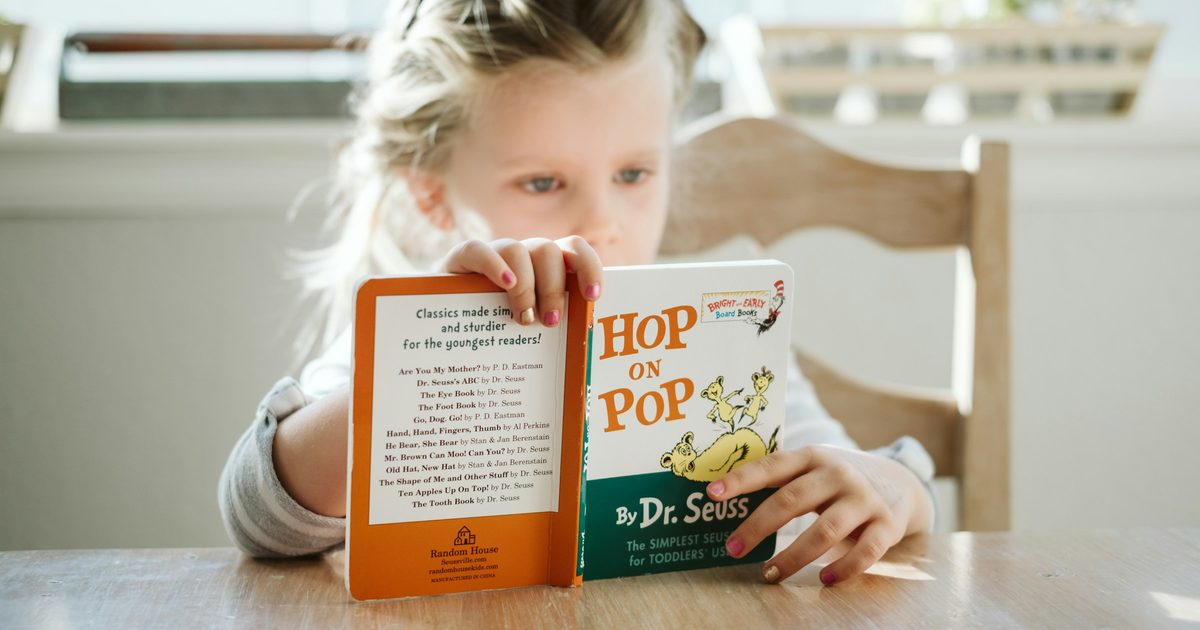
The problem has taken a personal turn. Grandparents and older relatives are using AI tools to create custom picture books for the children in their lives. These are not generic stories generated by a faceless machine. They are tailored narratives that use a child's real name, the names of family members, and details from actual family experiences. The AI weaves these real-life elements into new storylines, producing characters that look and act like the child and their loved ones, all so that the little reader can “see her family reflected” in the pages.
A Wrong Turn in Gift Giving
At first glance, the idea might seem sweet. A grandparent who lives far away wants to feel close to a grandchild. They want to give a gift that is personal, meaningful, and unique. AI makes it easy to produce a one-of-a-kind storybook in minutes. But parents who have witnessed this trend are horrified. Multiple parents have described receiving such AI-generated storybooks from grandparents and other senior family members. Some have gone so far as to call the practice “morally reprehensible.”
Why such a strong reaction? Part of it is the loss of something deeply human. A handmade story, written by a grandparent in their own handwriting, carries a different weight than a machine-generated text that was assembled from prompts and recycled patterns. Even if the AI story is polished and visually appealing, it cannot replicate the thought, care, and emotional labor of a human sitting down to write something for a child. The child may not consciously understand the difference, but the parents do. They see a shortcut that cheapens an intimate act.
There is also the problem of consent. These AI tools often ask for personal details about the child, including their preferences, personality traits, and family members. The grandparent is sharing information about a child without the parent's explicit approval. That information is then fed into a third-party service, which may store it, use it for training, or process it in ways the family does not fully understand. Parents are understandably uneasy about turning their child's private world into raw material for a generative model.
AI Slop Is Everywhere
The problem extends far beyond well-meaning grandparents. Online marketplaces are filled with AI-generated children's books. Some of these books are barely coherent. They are assembled from sparsely trained models and sold for a few dollars, often with no human editing. The goal is not to create a quality story, but to capture a few sales and move on. The result is a flood of generic, sometimes bizarre tales that are marketed directly to parents and children.
There are also tools that encourage people to use AI to write birthday messages, memorial tributes, and thank-you notes. These tools strip away the effort that makes gestures meaningful. When a tribute to a real person is generated by a machine, it loses the authenticity that the recipient deserves. This is especially troubling when the tribute is meant to comfort someone in a moment of loss or celebration.
Even more troubling is the role of the companies that make AI slop possible. Amazon, which is both one of the world's largest retailers and a major AI developer, has been criticized for allowing AI-written knockoffs to flood its bookstore. A technology journalist recently discovered that someone had used AI to write a biography about her and was selling it on Amazon. The book was presumably assembled from public information, but it was presented as a real biography, without the journalist's permission or involvement. This is just one of countless examples of AI slop polluting the marketplace.
Platforms That Create and Profit From the Problem
The irony is that the same companies that are often forced to clean up AI messes are also building tools that make it easier to create the mess. Amazon, for example, has long offered a feature called “Create with Alexa” that lets users generate bedtime stories for children, complete with illustrations and animations. As far back as 2024, it was reported that Amazon's store had a serious AI slop book problem. In 2026, Amazon expanded its AI ambitions with tools that let users create podcasts on almost any topic, simply by giving Alexa a prompt.
YouTube is in a similar position. The platform is owned by Google, a company that is also one of the leading developers of AI technology. YouTube has seen a massive wave of AI-generated “brainrot” content aimed at children. These videos use repetitive, weird, and often low-quality AI visuals and narration to capture the attention of young viewers. Some of them have millions of views. They are designed to maximize watch time, not to educate or entertain in a healthy way.
These platforms have positioned themselves as the guardians of culture. Amazon is not just a bookstore; it is also a major distributor of films, television shows, and music. Google controls the largest video platform in the world. But instead of using their power to protect children from AI slop, they are often adding more fuel to the fire. Their AI tools make it easy for anyone to produce books, videos, and audio content, and their marketplaces distribute that content without a meaningful filter.
What This Does to Children
The rise of AI-generated children's media raises important questions about childhood development. Children learn about the world through stories. Stories help them understand emotions, relationships, and moral choices. They also teach children to recognize patterns, follow narratives, and distinguish the real from the imagined. When a story is generated by an AI, it may lack the coherence, emotional depth, and intentionality that a human author brings.
AI-generated books are often derivative. They borrow structures and phrases from other stories, but they do not truly understand what makes a story meaningful. This can result in narratives that feel flat, weird, or unsatisfying. A child may still enjoy the novelty of seeing their own name in a book, but they are not getting the same quality of story that they would from a well-crafted picture book. Over time, exposure to low-quality stories could affect a child's expectations and appreciation for literature.
There is also a subtler danger. When a child's personal experiences and family details are turned into an AI-generated story, the child may begin to see their life as something that can be manufactured, packaged, and consumed. The line between a genuine family memory and a commercial product becomes blurred. This is especially harmful when the AI version of the story is inaccurate, invasive, or just plain wrong. The child may not know the difference, but the family will.
The Business of AI Slop
The commercial incentives behind AI slop are powerful. Producing an AI-generated children's book takes almost no time and almost no money. A seller can create dozens of books in a single afternoon and list them all online. The books are priced cheaply, and they often appear in search results alongside legitimate titles. Parents who are not careful may buy them by mistake, assuming that the book was written by a real author.
This crowd-out effect is damaging real authors. Independent writers and illustrators already struggle to compete with large publishers. Now they also have to compete with an endless supply of machine-generated content. It is becoming harder for a quality book to get noticed, especially in niche categories like personalized children's stories. The flood of AI slop is not just a nuisance; it is an economic threat to human creativity.
The same dynamic plays out on YouTube. AI-generated videos are cheap to produce and can be optimized for search and recommendation algorithms. They take attention away from thoughtful, human-made content. When algorithms are based on engagement rather than quality, AI slop has a built-in advantage. It can be designed to trigger clicks, keep eyes on the screen, and generate ad revenue, regardless of whether it has any educational or artistic value.
Who Is Responsible?
It is tempting to blame grandparents for falling for AI promises, or to blame parents for not being more vigilant. But the responsibility lies with the platforms that enable and profit from this content. Amazon, Google, and other tech giants have the ability to implement stricter policies, label AI-generated content, and demote or remove low-quality synthetic works. So far, their actions have not matched the scale of the problem.
Some platforms have begun to explore labeling requirements for AI-generated media. But labels alone are not enough. Without strong enforcement, bad actors can simply remove the label or find ways to hide their methods. There is also a need for better detection tools at the platform level, along with clear policies that allow for quick removal of deceptive or harmful AI content.
Parents and grandparents also need to take a step back. Just because a tool can generate a personalized story does not mean that it is the right way to show love. A handwritten letter, a homemade craft, or a favorite book read aloud by a grandparent is worth more than a thousand AI-generated pages. These gestures require time and effort, and that is exactly what makes them meaningful.
For the tech industry, the warning is clear. AI slop is not a harmless side effect of innovation. It is a cultural pollution that has real consequences, especially for children. The companies that control our bookshelves, screen time, and memory-making tools have a responsibility to protect childhood from the cheap, hollow, and often deceptive content that AI can produce in unlimited quantities. The tools should serve human connection, not replace it with a synthetic imitation.
Source:Digital Trends News