

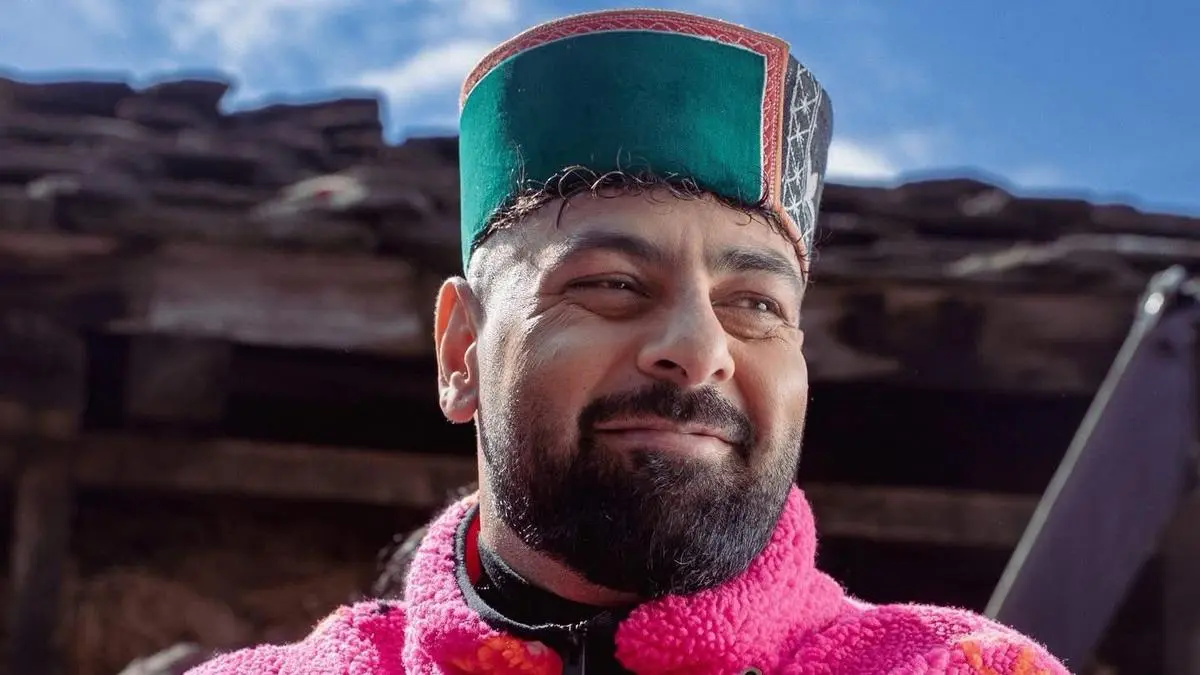
Singer-songwriter Badshah, known for chart-topping hits like 'Abhi Toh Party Shuru Hui Hai' and 'Genda Phool', found himself at the center of a controversy over his latest track 'Tateeree'. Released in early March 2026, the song quickly drew criticism for its lyrics, which were perceived as demeaning toward women and minors, particularly those from Haryana. On March 7, Badshah took to Instagram to issue a public apology, stating that the track had been removed from all platforms.
In the video apology, Badshah, who hails from Haryana, said, 'My new song has released and I am seeing that the lyrics and the visual representation has caused a lot of people, especially from Haryana, a lot of hurt. Firstly, I want to say that I am from Haryana. Those who know me will vouch for the fact that my entire identity rests on it. I am a proud Haryanvi.' He further clarified that his intention was never to target women or children, but rather to engage in typical hip-hop rivalries where lyrics often take aim at competitors. 'I never had the intention or the aim to speak of any women or children of Haryana in this manner. I am from the hip hop genre so the lyrics are often added on to show the competition down, for the competitor. This was never meant for the women or the kids.'
The controversy escalated rapidly. On Friday, March 6, the Panchkula Police registered an FIR against Badshah under various provisions of the Indian Penal Code and the Information Technology Act. The complaint was lodged by a Panchkula resident who alleged that the song contained objectionable lyrics and visuals that 'hurt the sentiments of the people of Haryana' and 'promoted disrespect toward women and minors.' Police also issued notices to streaming platforms and social media sites to remove the video immediately, and reports indicated that raids were being conducted to arrest the singer.
Badshah, whose real name is Aditya Prateek Singh Sisodia, has been a prominent figure in the Indian music scene since his debut in the early 2010s. Born in Delhi to a Punjabi-Haryanvi family, he gained fame with his unique blend of hip-hop, rap, and Punjabi folk. His earlier tracks such as 'DJ Waley Babu', 'Kar Gayi Chull', and 'The Breakup Song' made him a household name. He also co-founded the music label 'Afternoon Records' and has collaborated with international artists like DJ Snake and Aastha Gill. Despite his commercial success, Badshah has courted controversy before—lyrics in some of his earlier songs faced criticism for being misogynistic or promoting substance abuse. However, the 'Tateeree' backlash marks one of the most serious incidents, involving legal action and police raids.
The state of Haryana has a complex cultural landscape, with strong traditions of honour and pride, especially regarding women. The song's lyrics reportedly included phrases that were interpreted as degrading to Haryanvi women and minors, leading to widespread outrage on social media. Many netizens demanded a boycott of Badshah's music, and local political leaders also weighed in, calling for strict action. The Haryana government, through the police, acted swiftly to register the FIR, reflecting the sensitivity of the issue in a state where such remarks can trigger significant social unrest.
In his apology, Badshah tried to reconcile with his Haryanvi roots: 'I would never do that. I have always tried to uplift Haryana's culture, however I can. But if this has caused hurt to anyone, I would like to express my heartfelt apology. I hope that you will consider me as Haryana's son, your own son and forgive me.' He also noted that the song was taken down voluntarily from platforms like YouTube, Spotify, and JioSaavn, and that he would cooperate with the investigation. Legal experts suggest that the FIR provisions include sections related to obscenity (Section 292 IPC), defamation (Section 499), and offences under the IT Act for publishing obscene material electronically. If convicted, Badshah could face up to three years in prison along with fines.
The incident also reignited debates about freedom of expression in the music industry. While some fans argue that hip-hop lyrics should be interpreted as artistic expression and not taken literally, critics maintain that artists must be held accountable for content that perpetuates harmful stereotypes. The case draws parallels to previous controversies involving Indian rappers like Honey Singh and Divine, who have faced similar backlash for lyrically charged content. However, the involvement of minors in the alleged offence has added a layer of severity, as laws protecting children are stringent.
Badshah's career trajectory has been remarkable. From an engineering dropout to one of India's highest-paid musicians, he has amassed a net worth of over ₹50 crore and millions of followers across social media. He has also ventured into television as a judge on reality shows and acted in a few cameo roles. His music often incorporates Punjabi and Haryanvi dialects, earning him a loyal fan base in northern India. The controversy comes at a time when he was set to announce a nationwide tour for his upcoming album. Industry insiders speculate that the backlash could delay or cancel the tour, and sponsors might reconsider their associations with the artist.
The removal of 'Tateeree' from platforms has not entirely quelled the outrage. Some groups have demanded a public hearing and a written apology to the women of Haryana. Meanwhile, Badshah's supporters have launched a social media campaign with the hashtag WeStandWithBadshah, arguing that the lyrics were taken out of context. Nevertheless, the police investigation continues, and sources say that Badshah may be summoned for questioning in the coming days. This incident serves as a stark reminder of the power and responsibility that comes with mass influence, especially when it intersects with regional pride and social norms.
As the dust settles, the music industry watches closely. The outcome of the legal proceedings could set a precedent for how similar cases are handled in the future. For now, Badshah remains contrite and focused on damage control. His apology video ended with a plea for forgiveness, hoping that his fans and the people of Haryana would see him as 'Haryana's son' and give him another chance. The coming weeks will reveal whether that sentiment resonates with the public and authorities alike.
Source:The Hindu News