

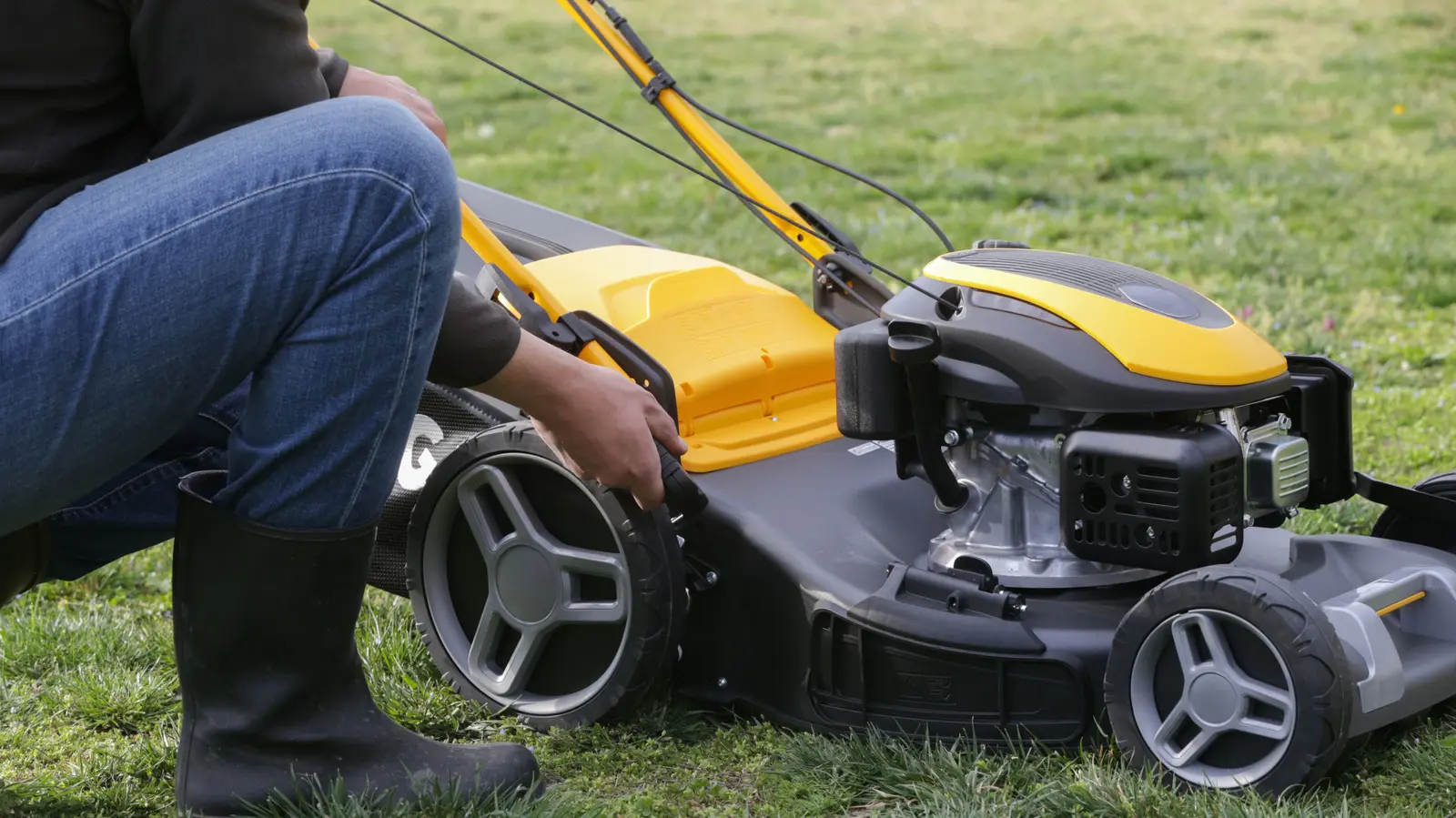
Every mower deck leads a punishing life. Sitting under the mower, it takes a continuous beating from rocks, sticks, landscaping staples, and any other debris hidden in the grass. Each pass sends dirt and sand into the side of the deck, and the blade creates a sandblasting effect that strips away paint, powder coating, and galvanized layers. Moisture from wet grass and morning dew then finds the bare metal, and rust begins to form. Over years of use, the combination of impact, abrasion, vibration, and corrosion creates weak spots that eventually turn into cracks.
Why Mower Decks Crack and Rust
Mower manufacturers build decks to be tough, but they cannot make them indestructible. Most residential decks are formed from sheet steel that is stamped or pressed into shape. The steel is usually 12 to 16 gauge, which means it is strong enough for normal cutting yet thin enough to keep weight down. That same thinness makes it vulnerable to concentrated stress. When a blade hits a root, stump, or metal object, the shock travels through the spindle housing into the deck. If the deck is already weakened by rust, a crack can start at a mounting point or along a stamped bend.
Rust is often the hidden culprit. Paint and powder coating protect the outside, but the underside of the deck is exposed to constant abuse. Wet grass clippings cling to the surface, holding moisture against the metal. Grass itself contains acids and other compounds that can break down protective coatings over time. When the coating fails, rust spreads underneath it, often without being visible from above. By the time a crack shows up through the paint, the surrounding metal may already be paper-thin.
Understanding the Metal: Mild Steel vs. Aluminum
The first thing to know before welding a mower deck is what material it is made from. Most mower decks are constructed from mild steel, a low-carbon steel that is one of the most forgiving metals for welding. A homeowner with a basic MIG welder, a bottle of shielding gas, and a little practice can usually make a sound repair on mild steel. The metal is relatively easy to fuse, and minor imperfections in technique do not always ruin the weld.
Aluminum decks are different. Aluminum is used on some premium residential and commercial mowers because it is lightweight and resistant to corrosion. But aluminum welds differently from steel. It requires more heat, cleaner base metal, and a technique that keeps the weld puddle under control. TIG welding is often preferred for aluminum deck repair because it gives the welder precise control over heat and filler metal. TIG welding is one of the more difficult welding processes to master, and doing it on thin, contaminated aluminum is not a beginner project. Even with the right equipment, an aluminum deck can warp or crack if the heat input is too high.
What Welding Can and Cannot Do
Welding can restore strength to a cracked mower deck, but it cannot make a rusty, degraded deck new again. A proper weld joins the two sides of a crack and prevents the crack from spreading. It can stabilize spindle housings, mounting brackets, wheel supports, and other areas that carry stress during mowing. In that sense, welding can save an expensive deck from being thrown away.
However, welding cannot replace missing material. Rust is not just surface dirt; it is metal that has been consumed by corrosion. Trying to weld over rust only creates a weak, contaminated weld that will fail quickly. The damaged steel must be cut away until healthy metal is exposed. If the rust is larger than a small patch, a fabricated steel plate can be welded in as a reinforcement. But if too much of the deck is gone, there is nothing left to hold a patch.
Welding also changes the structure of thin steel. The heat from a continuous weld can distort a mower deck, pulling it out of shape and causing the blade housing to sit unevenly. To minimize warping, repairs on thin deck metal should use short stitch welds rather than one long bead. Stitching keeps the heat concentrated in small areas and lets the metal cool between passes. Overlapping the stitches gradually builds a strong seam without dumping excessive heat into the panel.
Preparing the Deck for a Weld
Preparation is the difference between a repair that lasts a season and one that lasts for years. Before any welding begins, the entire area around the crack must be clean. Paint, grease, rust, and dirt should be removed with a grinder, flap disc, wire brush, or chemical cleaner. The weld area needs bare, shiny metal on both sides of the joint. Any contamination remaining on the steel will cause porosity, weak penetration, or a brittle weld.
For cracks, stop-drilling is a simple and effective technique. Drill a small hole at each end of the crack before welding. The holes stop the crack from extending farther when heat is applied. After the holes are drilled, the crack can be ground out slightly to create a small groove. This groove gives the weld deeper penetration and a stronger bond than simply filling the surface.
Cleaning is especially important when a mower deck is galvanized. Galvanized coatings produce toxic fumes when heated, and the zinc can contaminate the weld. Any galvanized layer in the weld zone must be ground away. Similarly, oil-soaked grass and debris should be cleaned from the underside of the deck to avoid smoke and fire hazards while welding.
When Welding Will Not Save the Deck
There are times when welding is the wrong approach. If rust is widespread and has attacked more than one area of the deck, a single weld repair will not be enough. Corrosion can travel far beyond the visible crack, leaving the metal around it thin and fragile. Even after a good weld, stress will move to the next weak section, causing another crack to appear a few mows later. The result is an endless patchwork of repairs on a deck that should have been replaced.
Structural parts require extra attention. The spindle housings, discharge chute, and mounting points carry the heaviest loads. If any of these areas are rusted out or cracked badly, welding a patch over them may be risky. The deck is a safety component, not just a metal shell. It contains blades that rotate at thousands of revolutions per minute. If a blade breaks or comes loose, the deck is the only barrier between the operator and flying metal. A weak weld that fails at the wrong moment is far more dangerous than the original crack.
To Weld or Not to Weld: Cost and Condition
The decision to weld or replace a mower deck comes down to two questions: how healthy is the remaining metal, and how much is the deck worth? A clean crack in an otherwise solid steel deck is an excellent candidate for welding. The repair can be done in an afternoon, and it can extend the deck's life for many seasons at a fraction of the cost of a new deck. Larger damaged areas can also be repaired with patch plates, plug welds, and reinforcing brackets if the surrounding material is still strong.
Professional labor must be considered as well. A shop that can MIG weld a steel deck may charge a reasonable fee for crack repair. Aluminum welding is another matter. The time required to clean, set up, and weld aluminum can make the labor cost close to the price of a new deck. In that situation, replacement may be the more sensible choice.
Mower decks are expensive, but they are also a safety-critical part of the machine. Before firing up a welder, look at the deck honestly. If the crack is a single fault in an otherwise solid piece of steel, welding is a smart fix. If rust has spread through large areas, if the metal is thin and flaking, or if multiple cracks have appeared, the deck has likely reached the end of its service life. A replacement deck will restore the mower's structure and avoid the cycle of repeated patch repairs.
Source:SlashGear News