

Introduction: The Myth of Assumed Performance
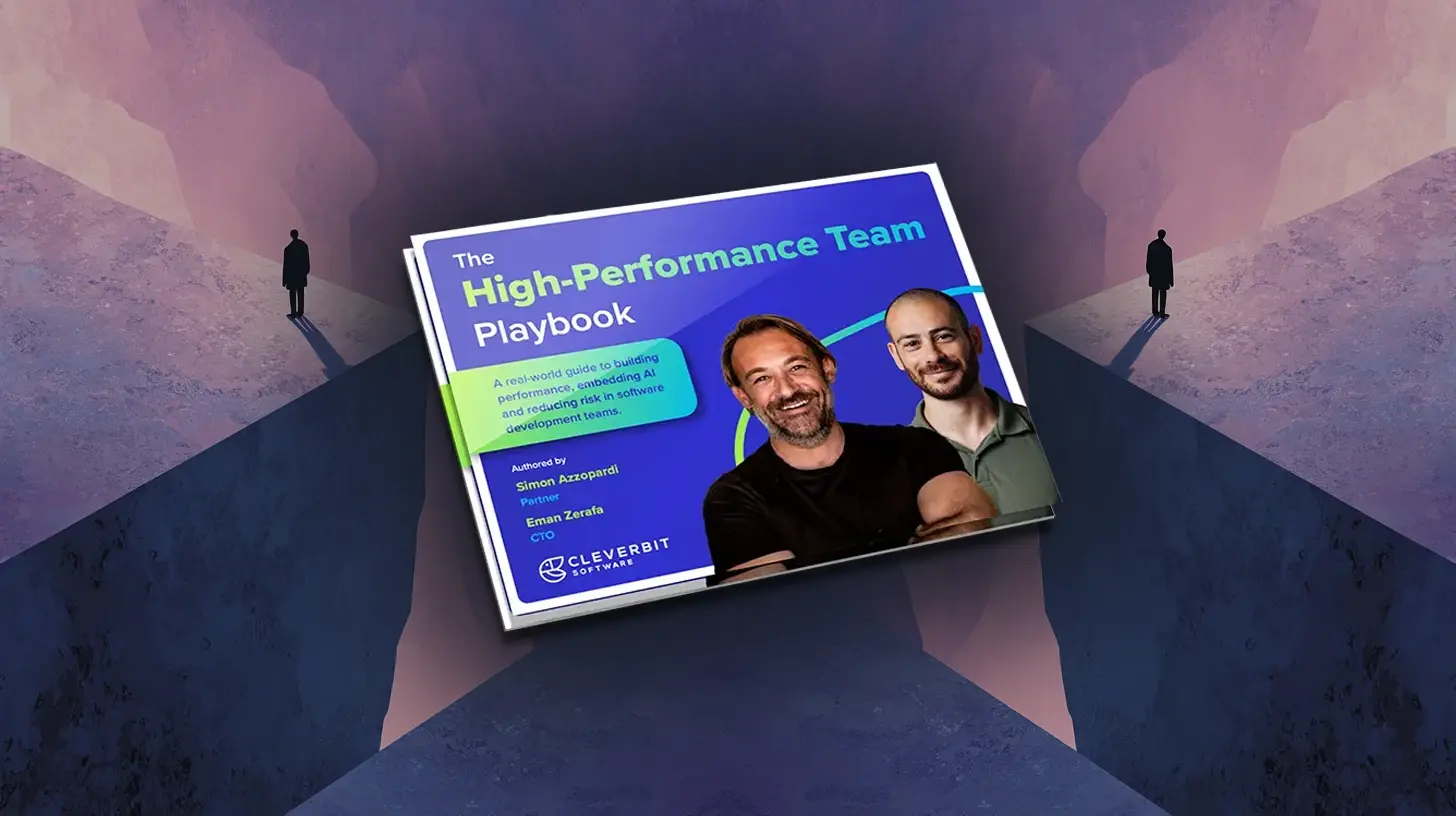
Most engineering teams don't fail because of bad engineers. They fail because performance is assumed. This playbook, based on insights from teams that have built, scaled, and handed over engineering functions at enterprise level, challenges that assumption. It provides a blueprint for building high-performance teams intentionally across four key dimensions: people, structure, leadership, and AI. The following sections detail the core principles and actionable strategies that have been tested under real delivery pressure.
Building Ownership, Trust, and Clarity
High-performance teams thrive on a foundation of ownership and trust. Ownership means every engineer feels responsible for outcomes, not just tasks. Trust allows teams to operate with autonomy and psychological safety. Clarity ensures everyone understands the mission and their role in achieving it. Practical strategies include setting clear OKRs, empowering teams to make technical decisions, and fostering a culture of blameless post-mortems. For example, at one enterprise, implementing squad-based ownership reduced dependency chains by 40% and increased deployment frequency. Engineers who previously waited for approvals began proactively resolving blockers, leading to faster iterations. Trust also requires transparent communication about failures and successes. Weekly demo sessions where teams showcase their work build collective accountability. Additionally, clarity comes from well-defined team charters that outline responsibilities, boundaries, and decision-making authority. Without clarity, even talented engineers waste energy on misaligned priorities. Leaders must invest time in refining these artifacts regularly, especially during organizational changes.
Hiring and Retaining for Performance, Not Comfort
Traditional hiring often focuses on cultural fit and comfort with existing tools. High-performance teams hire for performance potential: problem-solving ability, learning agility, and a track record of delivering results. Retaining top performers requires challenging work, growth opportunities, and fair compensation. Avoid the trap of hiring for diversity of thought? Actually embrace it. Use structured technical assessments and on-the-job challenges. One team found that hiring engineers with startup experience brought a bias for action that revitalized their enterprise culture. Retention strategies include providing clear career paths, offering regular feedback, and creating environments where engineers can influence technical direction. For instance, a rotation program that allows engineers to work on different parts of the system prevents stagnation. Compensation should be benchmarked against market rates and tied to outcomes rather than tenure. The playbook emphasizes that hiring for comfort leads to homogeneous teams that struggle with innovation. Instead, seek candidates who demonstrate curiosity and resilience. Onboarding processes should also be designed to ramp up new hires quickly, with paired programming sessions and incremental responsibility. By focusing on performance potential from the outset, teams build a self-reinforcing culture of excellence.
Structuring Teams That Scale Without Bureaucracy
As teams grow, bureaucracy inevitably creeps in. The key is to design structures that scale while preserving agility. Use the two-pizza team concept, align teams around business domains rather than technology stacks, and implement lightweight coordination mechanisms. For example, using a matrix structure with a platform team and multiple product teams allows shared services without silos. This playbook offers concrete templates for team topology, communication channels, and governance. One successful pattern is the 'Spotify model' adapted for enterprise, where squads, chapters, and guilds enable both autonomy and knowledge sharing. However, scale introduces complexity: cross-team dependencies must be managed via APIs and service-level agreements. The playbook recommends regular 'team health checks' to identify friction points before they become bottlenecks. Additionally, empower teams to own their deployment pipelines and monitoring, reducing handoffs. Avoid excessive process overhead; instead, establish lightweight rituals like daily stand-ups and retrospectives. As the organization grows, invest in a dedicated DevOps or platform team that internalizes common infrastructure concerns, freeing product teams to focus on features. The ultimate goal is to maintain the speed of a small startup even within a large enterprise, and this section provides the structural blueprints to achieve that.
Using AI as a Force Multiplier (Without Losing Control)
AI can dramatically increase engineering productivity, but it also introduces risks. Use AI for code generation, testing, and monitoring, but maintain human oversight. Establish guardrails for AI usage: review all generated code, limit AI access to sensitive data, and continuously evaluate outputs. The playbook covers how to integrate AI tools into the development lifecycle without sacrificing quality or security. One example: a team using AI-assisted code reviews reduced cycle time by 30% while maintaining defect rates. AI can also automate repetitive tasks like documentation generation, test case creation, and even on-call incident response. However, over-reliance on AI can lead to blind spots. Engineers must understand the limitations of AI models and validate outputs, especially for critical components. The playbook recommends a 'human-in-the-loop' approach for high-stakes decisions. Additionally, AI can be used to analyze historical data to predict build failures or performance regressions, enabling proactive remediation. But governance is crucial: define policies for when AI can act autonomously and when human approval is required. Start with small, well-scoped experiments, measure impact, and gradually expand. By treating AI as a powerful assistant rather than a replacement, teams can amplify their capabilities without losing control over system integrity.
Measuring What Actually Drives Long-Term Results
Vanity metrics like lines of code or number of commits tell little about true performance. Focus on outcome metrics: deployment frequency, lead time for changes, mean time to recover, and change failure rate. Also measure team health: engagement scores, knowledge sharing, and innovation rate. The playbook provides a framework for selecting the right metrics and creating a data-driven culture that avoids gaming the system. For instance, one team noticed that their lead time decreased but change failure rate increased; they adjusted their testing strategy accordingly. Metrics should be visible to everyone and reviewed in regular retrospectives. Beyond quantitative measures, qualitative feedback from post-mortems and surveys provides context. The playbook warns against using metrics for individual performance evaluation, as this encourages politicization. Instead, use metrics to identify systemic improvements. For example, if deployment frequency is low, investigate the bottlenecks in CI/CD pipelines. If mean time to recover is high, invest in better monitoring and runbooks. The goal is to create a learning organization where data informs decisions without creating a culture of blame. By measuring what matters, engineering leaders can demonstrate the value of their teams to the broader business and continuously improve their processes.
Practical and Tested Under Real Delivery Pressure
Everything inside this playbook is practical, opinionated, and tested under real delivery pressure. It draws from years of experience engineering leaders have shared across multiple enterprises. Whether you are a CTO, VP of Engineering, or a senior engineer aspiring to lead, these insights will help you build a team that consistently delivers high-quality software while maintaining a healthy culture. The playbook does not shy away from hard truths: building high-performance teams requires intentional effort, willingness to experiment, and sometimes making unpopular decisions. But the payoff is immense—teams that ship faster, innovate more, and attract top talent. Each strategy included has been refined through failures and successes, ensuring that readers can apply them with confidence. The final section ties together the core themes: performance is not accidental; it is engineered through deliberate practices in hiring, structure, leadership, and technology. By adopting the principles outlined, engineering leaders can transform their teams into high-performance powerhouses capable of tackling the most complex challenges.
Source:Help Net Security News