

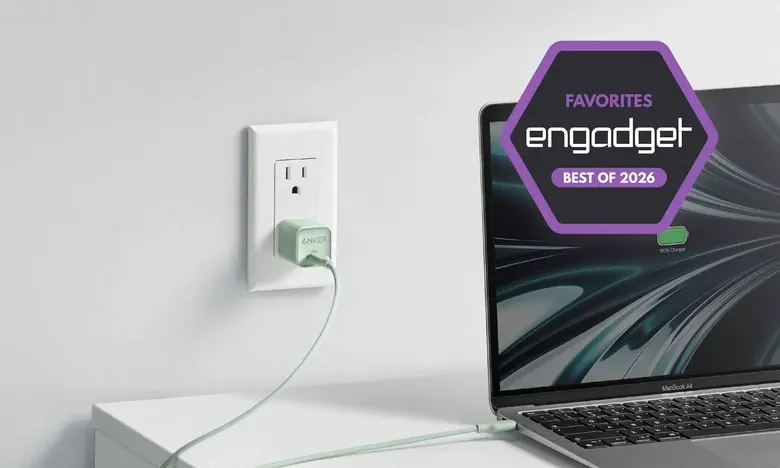
Fast chargers are no longer a nice-to-have item. With phones, tablets, laptops and wearables all competing for outlets, the right charger can make a difference in how quickly you get back to full power without worrying about overheating or long-term battery wear. Since many devices now ship without a power brick, choosing a charger with the right compatibility, ports and charging technology is just as important as raw speed.
Today's best fast chargers are designed to handle multiple devices at once, whether that's a phone, laptop, AirPods or even an Apple Watch. Many models combine Type-C ports with a USB-A charger option to support older cables like a Lightning cable, while newer designs focus on multi-port chargers that can intelligently distribute power across everything you plug in. Brands like Anker continue to refine their designs, with compact options such as an Anker charger that's easy to toss in a bag but powerful enough for everyday use.
With so many wattages, port layouts and standards to consider, finding the best fast charger depends on how and where you charge. Whether you want a simple wall adapter, a travel-friendly option or a desktop hub built to power everything at once, this guide breaks down our top picks for 2026.
Key facts about fast charging
- Fast charging generally refers to any charger that can deliver more than 15 to 18 watts, although some phones now accept 100W or more.
- GaN (gallium nitride) chargers can be 30 to 50 percent smaller and lighter than older silicon-based adapters.
- USB Power Delivery (USB PD) is the most widely supported fast-charging standard for USB-C devices, but some phones use proprietary standards.
- Multi-port GaN chargers distribute power intelligently, but the exact port layout and wattage sharing matter.
- Using a high-quality USB-C cable with an E-marker chip is essential for sustained high-speed charging.
- Fast charging has a negligible impact on battery health when the charger and cable are compatible with the device.
USB Power Delivery and modern charging standards
Understanding USB Power Delivery is key. USB PD is a universal charging specification built into many modern laptops, tablets, and smartphones. It allows a charger and device to negotiate the exact voltage and current needed, ranging from 5V to 20V in older versions, and up to 48V with USB PD 3.1 Extended Power Range. That negotiation protects devices from receiving too much power and enables a single charger to serve many different products.
Newer USB PD chargers also support Programmable Power Supply, or PPS. PPS allows the charger to adjust voltage in small increments, which helps compatible phones charge faster while reducing heat. It is especially useful for Samsung Galaxy devices and many Android flagships that use adaptive fast charging. If you own a laptop and a phone, looking for a charger with USB PD and PPS support is a good idea.
How to choose the right wattage
For any charger, wattage determines how quickly a device can draw power. A standard smartphone may need only 20W to charge at full speed, while a tablet like an iPad Pro can use 30W to 40W. Ultraportable laptops often require 45W to 65W, and larger laptops can need 100W or more. Matching the charger's output to the device's maximum input is more important than buying the highest-wattage brick available.
If you frequently charge a laptop and a phone from the same adapter, a 65W charger with two USB-C ports is usually enough. When the laptop is plugged in, the charger might dedicate 45W to the laptop and 20W to the phone. If you need to charge a laptop, phone, earbuds, and a smartwatch at the same time, a 100W four-port charger provides more flexibility. The key is to check the charger's power-sharing table, because not all ports deliver the same maximum wattage simultaneously.
Charging multiple devices without slowing everything down
The best multi-port chargers use smart power distribution. When you plug in one device, the charger sends its full rated output to that port. When you add a second device, it reallocates power so neither port loses too much. Some chargers include a dedicated USB-A port for older accessories, which is convenient for smartwatches, wireless earbuds, or old lightning cables. However, USB-A ports often cap out at 12W to 18W, so they are best reserved for smaller devices.
For travelers, a compact GaN charger with foldable prongs and a small footprint can replace the charger that came with your laptop and phone. Some adapters even come with interchangeable international plugs, making them ideal for overseas trips. Pay attention to the total weight too, because a 100W charger with four ports can be surprisingly heavy.
Safety and battery health
Fast charging does generate more heat than slow charging. Heat is one of the main factors that degrade lithium-ion batteries over time. To reduce this risk, modern chargers and devices use temperature sensors and charging management systems. Phones reduce their charging speed as the battery fills, and many devices stop charging temporarily if the temperature gets too high. This built-in protection means that using a reputable fast charger is unlikely to cause noticeable battery damage in normal daily use.
What matters most is using a charger and cable that are designed for your device. A cheap cable without proper insulation or a charger with poor safety certifications can deliver unstable power and generate excess heat. Look for chargers that are certified to industry safety standards, such as UL-listed or CE-marked products. This is especially important when buying high-wattage adapters for laptops.
Why GaN changed fast charging
Gallium nitride is a semiconductor that conducts electricity more efficiently than silicon. In a power adapter, GaN switches handle higher voltages with less energy loss, so manufacturers can make smaller components. That is why a 65W GaN charger can be barely larger than a traditional 20W brick. GaN also handles heat better, which allows sustained high-power output without the charger melting down or throttling during a long charging session.
If you are buying a new charger in 2026, GaN is the default choice. It is not an expensive specialty feature anymore. Even budget chargers from major brands use GaN technology, so you do not need to pay a huge premium for a compact adapter.
Fast charger FAQs
What is GaN?
When looking for chargers, you may notice that some are marked as GaN, which stands for gallium nitride. This is an important distinction because, when compared to older adapters that use silicon switches, GaN-based devices support increased power efficiency and output, allowing manufacturers to create more compact bricks that run cooler and support higher wattages.
Depending on the specific power output, GaN adapters can be 30 to 50 percent smaller and lighter than silicon-based alternatives. That might not sound like much, but when they're sitting in a bag alongside a laptop and a half dozen other accessories you might have, cutting down on excess bulk and weight goes a long way.
Do fast chargers affect battery life?
Technically yes, because the process of sending a ton of watts into a gadget and potentially generating additional heat while doing so can decrease battery health over time. That said, modern devices and chargers use various protocols to ensure temperatures and power levels stay within preset limits — in large part to avoid damaging the product or creating a safety risk. At a base level, simply charging a gadget regardless of speed will cause degradation over time, so as long as you use compatible chargers and cables, the impact of fast charging is generally quite negligible.
What's the difference between a fast charger and a regular charger?
There isn't a single generally accepted definition of fast charging. However, with power adapters capable of sending as little as five watts or less, it's important to know how much juice your device is getting, especially if you need to recharge something quickly. Depending on who you ask, particularly when it comes to smartphones, any charger that can push out more than 15 to 18 watts is generally considered to be fast. With some phones capable of receiving more than 100 watts and laptops needing up to 240 watts, it is more important than ever to consider what devices you own before buying a new fast charger.
The future of fast charging
As USB PD 3.1 becomes more common, a single USB-C charger will support everything from earbuds to large laptops. The same charger that powers a phone can deliver up to 240W to a compatible workstation, which means fewer bricks in your bag. That future-proofing, combined with GaN design, makes 2026 an excellent time to upgrade an old collection of mixed adapters.
Before buying, check your devices' maximum charging speeds and note how many ports you really need. If you mostly charge one phone at night, a 20W or 30W compact adapter is enough. If you travel with a laptop and several gadgets, a 65W dual-port or 100W multi-port GaN charger will serve you better. Pair it with a certified USB-C cable rated for the same wattage, and you will get consistent fast charging without unnecessary heat or battery strain.
Source:Engadget News